

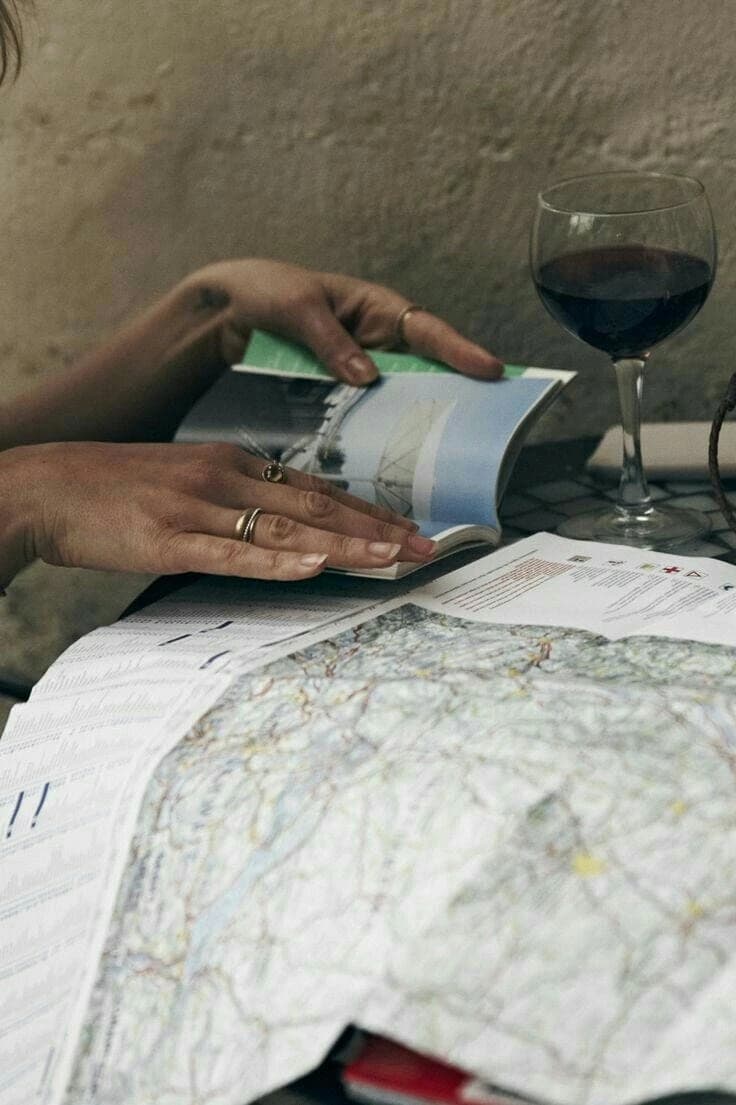
There's a particular kind of traveler who plans everything. Every hour accounted for. Every restaurant researched and reserved weeks in advance. Every museum timed to avoid the crowds. Every day structured into a sequence of experiences that have been read about, saved, screenshot and organised into a folder on their phone labelled with the destination and the dates.
This traveler is efficient. They see a lot. They waste very little time. They return home having completed everything they set out to do.
And they often feel, quietly, that something was missing.
Over-planning travel isn't really about travel. It's about control.
The itinerary as anxiety management
When you plan every hour of a trip, you're protecting yourself from uncertainty, from the discomfort of not knowing what comes next, from the possibility of wasted time, from the fear of arriving somewhere and not knowing what to do. The itinerary is a security blanket dressed up as a schedule. It makes the unfamiliar feel manageable before you've even arrived.
But the unfamiliar is exactly what you went for. You didn't travel to a place you'd never been in order to move through it on a predetermined path, experiencing a curated sequence of approved highlights. You went because something about that place called to you — its strangeness, its difference, its capacity to surprise.
The itinerary neutralizes that capacity before it has a chance to work.
What over-planning actually removes
When every hour is scheduled, there's no room for the things that can't be scheduled.
The conversation with a stranger that lasts three hours and changes how you see something. The road you took because it looked interesting and ended up leading somewhere extraordinary. The morning you spent doing nothing in a square because the light was perfect and you didn't want to leave. The invitation you accepted because you had time and no reason to say no.
None of these appear in an itinerary. They can't — they don't exist until the moment they happen. They require space, slowness, the willingness to be available to what a place offers rather than what you planned to take from it.
Over-planning fills that space with logistics. Every gap in the schedule becomes a threat to be eliminated rather than an opportunity to be discovered. You move from checkpoint to checkpoint, collecting experiences like items on a list, always oriented toward the next thing rather than present in the current one.
The best travel memories almost never come from the itinerary. They come from what happened when you deviated from it.
The tyranny of TripAdvisor
We've outsourced our curiosity to algorithms. Before a trip, most people now spend hours consuming other people's experiences of a place — the top-rated restaurants, the epic activities, the can't-miss attractions, the hidden gems that have been so thoroughly discovered they're no longer hidden.
They arrive with a mental map built entirely from other people's opinions, and they spend their trip validating that map rather than drawing their own.
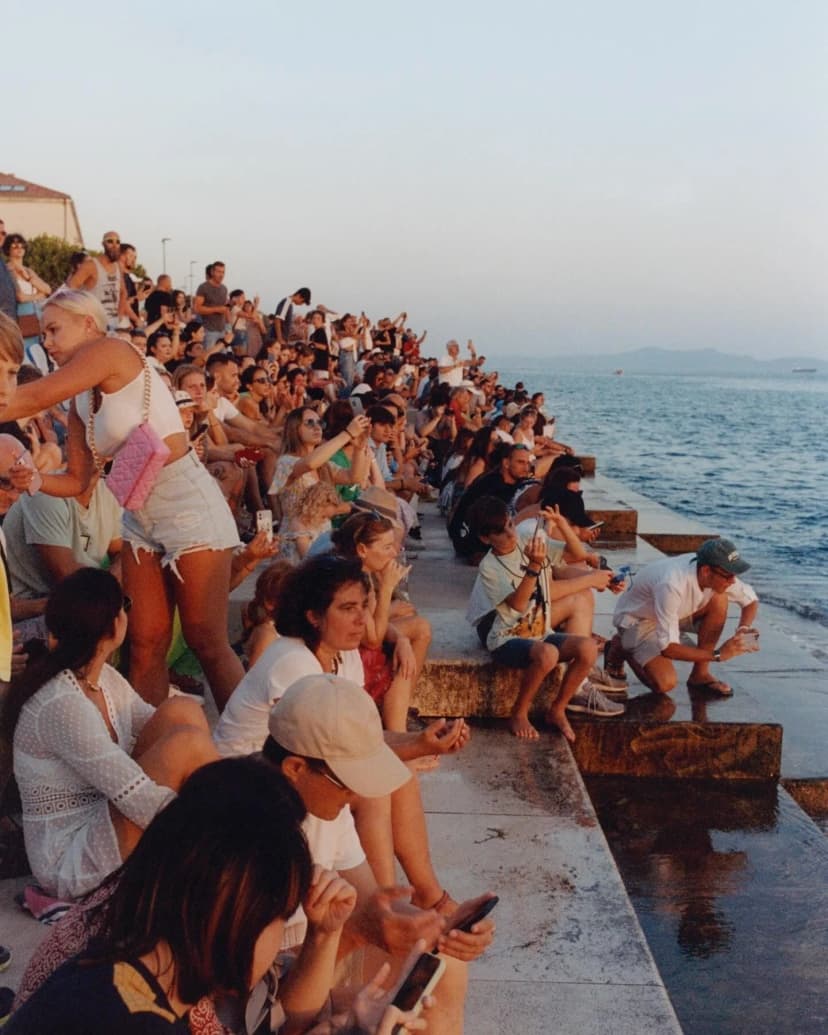
The result is that everyone has the same trip. The same restaurants, the same viewpoints, the same photos taken from the same spots. Travel becomes a collective ritual of experiencing what has already been pre-approved for experience — a mass pilgrimage to destinations that exist primarily as content.
The places that don't appear on lists — the ones you only find by walking in a direction that looked interesting, or asking a host what they actually love about where they live, or following a sound or a smell — those remain invisible to the algorithm. They're not rated because they haven't been discovered. They haven't been discovered because nobody was looking. Nobody was looking because they had an itinerary.
What farmhouses do to your schedule
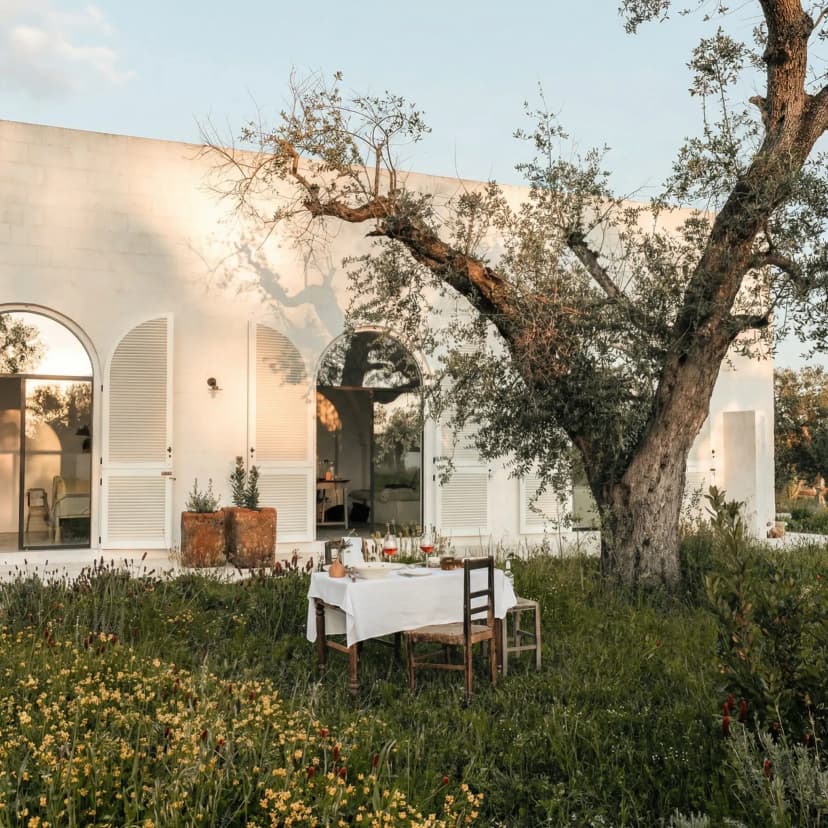
Staying at a farmhouse changes your relationship to planning in ways that happen almost without your noticing.
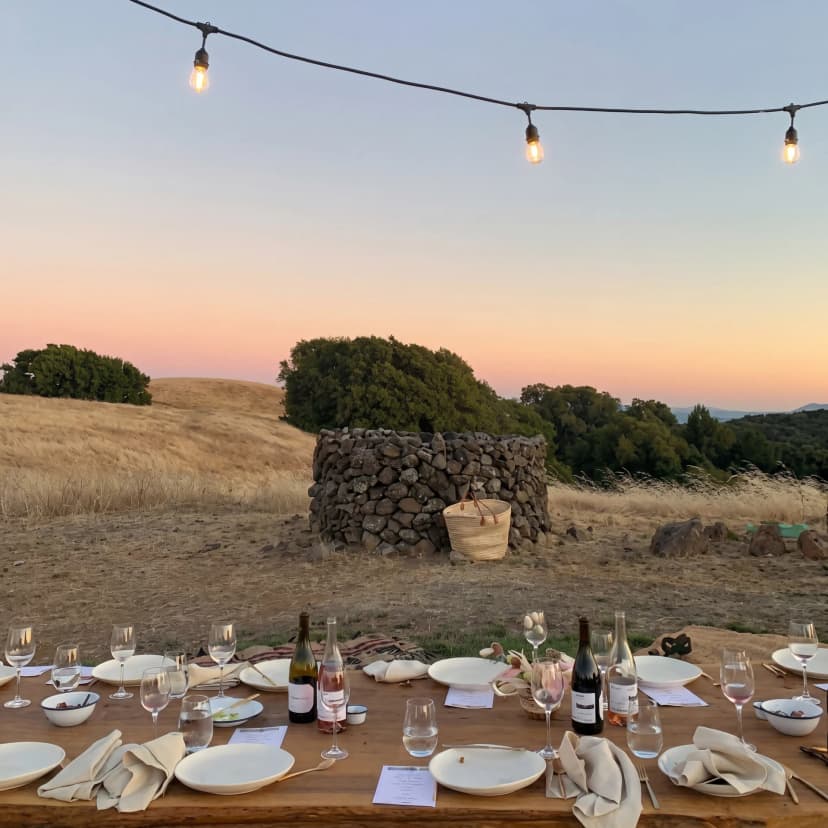
The place itself has a rhythm — meals at certain times, activities tied to the land and the season, a pace set by the hosts' daily life rather than by your agenda. You adapt to that rhythm not because you're forced to but because it makes sense to. You're a guest in someone's home and their world doesn't reorganise itself around your itinerary.
This is disorienting at first, especially for practised over-planners. The day doesn't unfold on your terms. You can't rush breakfast because you have to be somewhere by ten. You can't skip the evening meal because it's inconvenient. The place asks you to slow down, to be present, to let the day happen rather than drive it.
And in that surrender, something opens. You start noticing what's around you — the landscape, the sounds, the small details of a place being lived in — rather than scanning the horizon for the next checkpoint. You have conversations that go somewhere because there's no reason to cut them short. You follow the host's recommendation not because it was in your plan but because you have time and it sounds interesting.
The itinerary dissolves. And what replaces it is better.
The unexpected as the point
Every traveller who has been doing this long enough has a version of the same story: the best thing that happened on a trip wasn't planned. It was the detour, the accident, the missed connection, the day everything went sideways and somehow turned into the day they remember most.
This isn't coincidence. The unexpected is better not because chaos produces quality but because it demands presence. When something unplanned happens, you can't be on autopilot. You have to respond, adapt, engage with what's actually in front of you rather than what you expected to find. You become fully there, in the specific moment, without the buffer of a predetermined script.
That presence is the condition for everything worth remembering in travel. The conversation, the discovery, the connection, the view you stumbled on — all of it required you to be available. And availability requires space. And space requires letting go of the itinerary.
Planning less isn't the same as caring less
There's a version of this argument that sounds like: don't prepare, just wing it, see what happens. That's not what this is.
Knowing the context of where you're going — its history, its culture, its language, its people — makes you a better traveller, not a worse one. Understanding the season, the region, the food, the traditions — that knowledge deepens every encounter rather than structuring it away.
The difference is between arriving with knowledge and arriving with a script. Knowledge makes you curious, receptive, capable of understanding what you find. A script makes you a tourist executing a plan, moving through a place rather than being in it.
You can read everything ever written about a region and still leave every day open. You can understand a culture deeply and still be available for what it offers unexpectedly. Preparation and presence aren't opposites — over-planning and presence are.
What you're actually protecting when you plan less
Leaving space in travel isn't irresponsible. It's a choice to protect the thing that makes travel worth doing in the first place: the possibility of being genuinely surprised.
Surprise requires uncertainty. Uncertainty requires relinquishing control. Relinquishing control requires trusting that what a place offers — unfiltered and unscheduled — is worth more than what you could have planned for yourself.
The best experiences in travel, like the best experiences in life, are rarely the ones you planned. They're the ones you were present enough to receive when they arrived unexpectedly.
The itinerary is a tool. A useful one, for sure. But when it becomes the trip itself — when the plan replaces the place — you've lost the thing you travelled for.
Put the phone down. Leave the afternoon open. Say yes to the thing that wasn't on the list.
The best part of the trip is probably waiting there.