
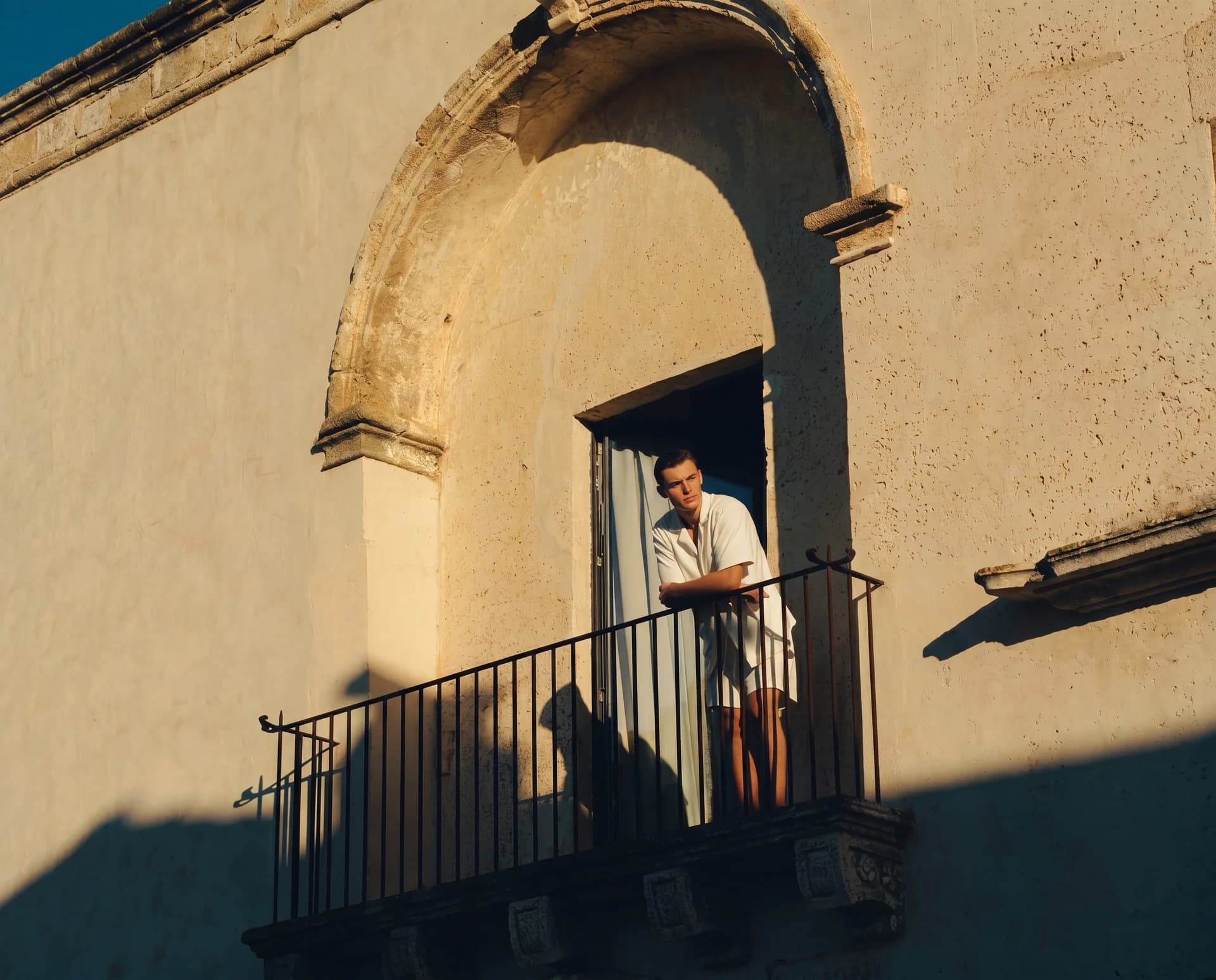
For a long time, luxury and farmhouses seemed to belong to two different worlds. Luxury meant polished lobbies, impeccable service and distance — from daily life, from effort, from the land. Farmhouses, on the other hand, were associated with simplicity, function and practicality. Comfortable, perhaps, but rarely considered refined.
That distinction no longer holds. Not because farmhouses have changed to imitate luxury — but because luxury itself is being quietly redefined.
Luxury that feels the same everywhere stops feeling luxurious.
When Luxury Meant Separation
Traditional luxury in travel was built around separation. Separation from discomfort. Separation from unpredictability. Separation from the ordinary. It offered controlled environments, standardized excellence and a sense of mastery over time and space. Everything was designed to be flawless and in doing so, often detached from where it was. A five-star room in one city could be swapped with a five-star room in another and very little would change.
This model worked when luxury was defined by access and rarity. When a certain level of comfort, climate control and service was difficult to attain, replicating it everywhere felt like an achievement. But in a world where almost anything can be replicated, optimized or booked instantly, those signals have lost their meaning. A minibar, a spa, a rooftop pool, a long amenities list — none of these guarantee that you will actually feel something.
What Luxury Is Quietly Becoming
A new definition is emerging — not in marketing slogans but in what thoughtful travelers consistently seek out. Luxury is shifting from excess to intention. From display to depth. From being looked after to being truly considered.
Time has become a luxury. Silence has become a luxury. Space — physical, emotional, mental — has become a luxury. And increasingly, so has authenticity.
Under this lens, luxury is not the ability to escape reality but the ability to inhabit it more fully. It appears in places that are coherent rather than perfect; in experiences that leave room rather than filling every moment; in stays where you feel part of a story instead of part of a market.
This is where farmhouses move from "charming alternative" to leading example.


Why Farmhouses Fit This New Definition
Farmhouses offer something traditional luxury often cannot: coherence. They are shaped by their environment rather than imposed upon it. Architecture responds to landscape. Materials are chosen for durability, climate, and craft — not for passing trends. Beauty emerges from proportion, patina, and restraint.
Many of the most compelling farmhouses today are the result of long-term projects: buildings restored slowly instead of built quickly; land cared for over years, not seasons; details refined not for photos, but for daily life. This kind of work cannot be rushed or scaled. It carries a different weight.
The result is a quiet form of luxury — one that feels grounded rather than performative.
When you arrive at a place like this, you sense that it existed before you and will exist after you, with or without your presence. You are not the center of the story. You are being invited into one.
Comfort Without Excess
Luxury has long been confused with abundance — more services, more options, more spectacle. Farmhouses challenge that logic by offering comfort without excess. Rooms that are generous but not oversized. Objects chosen to last, not to impress. Spaces designed to be lived in, not staged.
The luxury is not in how much is provided, but in how precisely it is offered. A bedroom that opens to a field instead of a corridor. Light that follows the sun instead of being permanently set to "mood." Meals shaped by season, not by menu size.
Attention comes from presence, not protocol. Hosts remember your preferences because they have shared time with you, not because they checked your profile. You may still find fine linen, good mattresses and beautiful ceramics — but they exist to serve life, not to perform it.
This is a different kind of comfort: personal, not institutional.


The Luxury of Being Rooted
What sets farmhouses apart is not just the aesthetic, but the relationship to place. Luxury today is increasingly tied to origin: where does this come from? Who made it? What impact did it have to exist?
Farmhouses make these connections visible. Food reflects the surrounding land: what grows in the garden, what is in season, what local producers bring. Energy choices reflect long-term thinking: insulation, passive cooling, wood stoves, solar panels — or simply learning to live with climate rather than against it. Architecture reflects climate and tradition: thick walls, small windows or large ones, inner courtyards, shaded terraces — forms developed over generations for reasons that still make sense.
Some farmhouses go further, becoming quiet laboratories for more regenerative ways of living: experimenting with soil health, water capture, low-impact materials, and self-sufficiency. Not as branding, but as a practical response to inhabiting land responsibly. For guests, this becomes a form of luxury that educates without instruction. You see how things are grown, built, repaired, and reused. You understand that beauty, comfort, and responsibility do not have to cancel each other out.
A Different Kind of Sophistication
Refinement does not always look like marble and chrome. There is sophistication in restraint: in places that do not need to impress immediately; in details that reveal themselves slowly; in environments that invite you to slow down rather than perform.
Farmhouses attract travelers who no longer equate luxury with being constantly entertained, but with being deeply considered. People who value spaces that respect their intelligence, their curiosity, and their need for quiet. This is not a rejection of design. It is design maturing into something more human.
The question becomes less "How much can we offer?" and more "What is truly necessary for someone to feel well here?" When that question is answered honestly, many of the traditional symbols of luxury fall away. What remains is clarity.
How This Aligns With Solwyn's Vision
Solwyn exists in this exact space — where farmhouses and luxury meet, not as opposites, but as two parts of the same evolution. For Solwyn, the future of high-end travel is not about stacking more amenities onto a stay. It is about honoring places where hospitality grows out of a way of life, coherence replaces spectacle, and comfort is rooted in reality rather than escape from it.
That is why the work of curation cannot be done at a distance. It means visiting, listening, understanding why a place exists before ever calling it "luxury" or "recommended." It means seeing hosts not as service providers, but as authors of a way of living.
A carefully restored farmhouse with four rooms, a shared table and a lived-in kitchen can be more truly luxurious than a five-star hotel with three restaurants and a spa. A place where you wake to the sound of animals, drink water from a local spring, and eat food grown metres away can feel more rare than any infinity pool. A stay where you are invited into real daily life — its quiet, its imperfections, its depth — can leave a deeper imprint than any choreographed "experience."
Solwyn's role is not to turn farmhouses into polished products, but to protect their singularity while helping travelers recognize them for what they are: some of the most refined, intentional forms of hospitality available today.
Not a Passing Trend, but a Shift
The rise of "luxury farmhouses" is often described as a trend. In reality, it points to a deeper cultural shift: away from spectacle and toward meaning; away from speed and toward presence; away from accumulation and toward care.
Luxury and farmhouses are not incompatible. They are converging around values of time, craftsmanship, authenticity and connection.
What emerges from this convergence is a quieter, more enduring form of luxury — one that feels less like escape and more like alignment: between how a place is built and how it is lived; between what a traveler seeks and what a host is ready to share.
The future of high-end travel may still include polished spaces and beautiful design. But it will increasingly be measured by something else: how deeply you felt connected, how honestly a place existed, and how gently it stayed with you after you left.
In that future, a farmhouse is not a downgrade from luxury. It is one of the purest expressions of what luxury has been trying to become.