
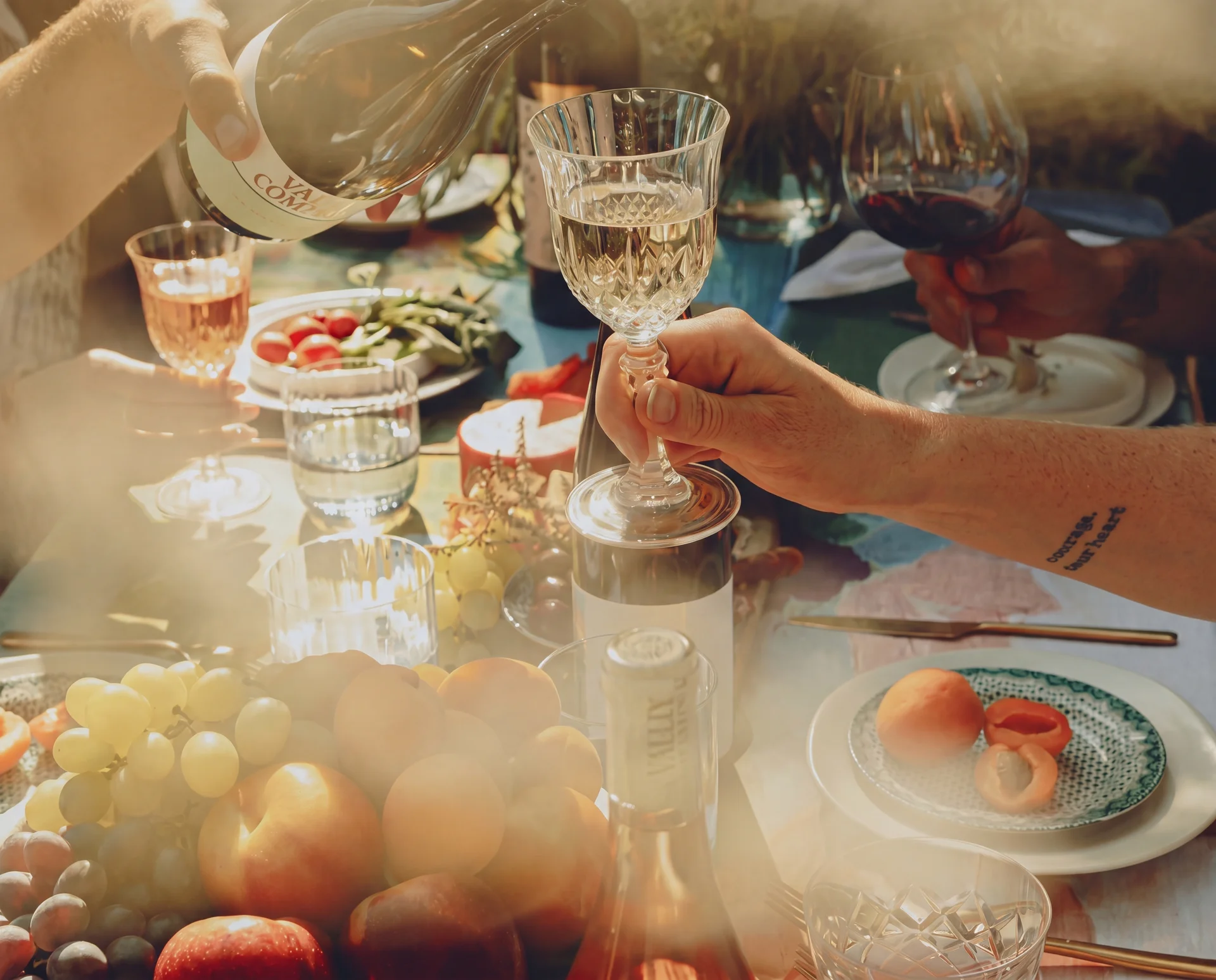
There's a specific moment that happens in almost every tourist restaurant — a moment so common you might not even notice it anymore. The waiter brings the menu. You scan dozens of options. Everything is available, all the time, regardless of season. You could order the same dishes in July or December, in this city or the next one over.
You choose something that sounds local. The food arrives. It's fine. Sometimes it's even good. But here's what you don't realize: you could have ordered this exact meal anywhere. The ingredients came from the same distributors that supply a hundred other restaurants. The recipe was standardized to appeal to the widest audience. The dish exists not because it belongs to this place, but because it belongs to a system designed to feed tourists efficiently.
And then, one evening, you eat at a farmhouse. There's a fixed menu. Maybe two options, maybe just one. You don't choose — you receive what's being made. And what's being made isn't designed for your preferences. It's what came from the land that day, what the season provides, what the host knows how to cook in a way that shows their personality, their history, their relationship to this specific place.
At a farmhouse, the meal could only exist here, now, made by this person. It's not replicable. It's not scalable.
That difference isn't just about food. It's about discovering where you're staying through flavors that can't be replicated anywhere else.
When the Menu Reflects the Land, Not the Market
The fixed menu at a farmhouse isn't a limitation — it's a direct expression of place. When a host serves you what's being made that evening, they're not restricting your choice. They're offering you something more valuable: food that belongs entirely to where you are. The vegetables came from the garden you walked past. The cheese came from the neighbor down the road. The recipe came from the host's grandmother, or their years of learning what grows here, what works, what tastes right in this climate, on this soil.
This is the opposite of how chain hotels and tourist restaurants operate. Those places offer endless choice precisely because nothing on the menu is tied to a specific location. The ingredients are sourced to be consistent year-round. The recipes are standardized to taste the same in Barcelona as they do in Berlin. You could be anywhere, eating anything, and the meal would be identical.
It's not designed to appeal to everyone. It's an expression of the host's relationship to their land, their suppliers, their region — and by extension, it becomes your way of understanding that relationship too.
The Chef's Personality on the Plate
When there's no menu to hide behind, food becomes personal. Before anything is cooked, the host asks. They want to know how you eat, what you love, what you avoid — not to limit themselves, but to understand who's at the table. From there, they work with what the land and season have given them, adapting and creating something that honors both.
The host isn't trying to please everyone. They're cooking what they know, what they love, what they've perfected over years — but shaped around you. Some dishes will surprise you. Others will feel humble, almost too simple. But all of it carries their touch, their choices, their personality.
You're not eating a product designed by a corporate kitchen. You're tasting someone's life.


Their knowledge of seasons, their relationships with local producers, their family's culinary history. And because they listened first, the meal feels made for you — not just served to you. This is deeply personal service: attentive without being formal, generous without being excessive. The host can't pull from an endless pantry or swap in imported ingredients. But within what they have — what grows here, what's in season — they make it work. They make it yours.
When you taste something that reflects both a person and a place, shaped in conversation with who you are, it changes everything. The food becomes a language for understanding: this is what this land produces, this is how people here cook, this is what matters to the person who welcomed you — and this is how they chose to welcome you.
Slow Living Tastes Different
Farmhouse meals operate in the rhythm of slow living — and you taste that rhythm in every dish. There's no rushing, but there's no chaos either. The kitchen runs with quiet efficiency. Courses arrive at the right moment, prepared with care and precision. But unlike formal dining, the host has time to stop, to explain the dish themselves, to pour their own wine and tell you its story. You sit with other guests, maybe with the host, and conversations unfold naturally between courses.
This isn't about being inefficient. It's about having space for the host to be present, for you to ask questions, for meals to become gatherings rather than transactions. Nobody's trying to turn tables. Time follows a different logic here.
And in that rhythm — efficient but never rushed, structured but never stiff — you're not just fed. You're connected to the place in a way no restaurant can replicate.
Flavors That Belong to a Place
The most important thing about farmhouse food isn't that it's "better" than what you'd find elsewhere. It's that it couldn't exist elsewhere. The dishes served at a farmhouse are inseparable from the land, the season, and the person cooking them. The host isn't sourcing ingredients to match a predetermined menu — they're building the menu around what's available, what's thriving, what their network of local producers brought them that week.
This is the opposite of how chain hotels operate. A Hilton breakfast in Madrid looks identical to one in Miami because consistency is the goal. The supply chain is designed to eliminate regional variation. You know exactly what you're getting, every time, anywhere. That reliability has value — but it also flattens the entire experience of eating into pure function. You're fed, but you learn nothing about where you are.
At a farmhouse, you can't help but learn. The meal itself is a map of the region's agriculture, culinary traditions, and seasonal cycles. You taste what grows well here. You discover ingredients you've never encountered because they don't travel, don't export, don't scale. You eat dishes that don't have English names because they've never needed to leave this region.
And those flavors stay with you — not just as memories, but as knowledge. You understand the place differently because you tasted it. You connected to the land through the most immediate, visceral experience possible: eating what it produces.


What You Take With You
Long after you leave, you'll remember the meals at a farmhouse in ways you'll never remember the restaurant where you scrolled through 47 options and ordered something safe. You'll remember that table in the Tuscan hills, where time seemed to stop. The taste of tomatoes still warm from the garden. The bread baked before sunrise. The way the host poured their own wine and told you its story. The conversation that lasted hours, the light fading slowly over the fields, the sense that this wasn't a service being performed but a life being shared.
You'll remember it because it was irreplaceable. Those flavors, that evening, that specific combination of people and place — it existed once, and only you were there.
And every time you think about it, you'll want to go back. That's what the tourist menu can never offer: a meal so rooted in a moment and a place that it stays with you. Not because it was perfect, but because it was real. Food as an expression of land, season, and someone's life. A memory that pulls you back, again and again, to the table where everything felt exactly as it should.