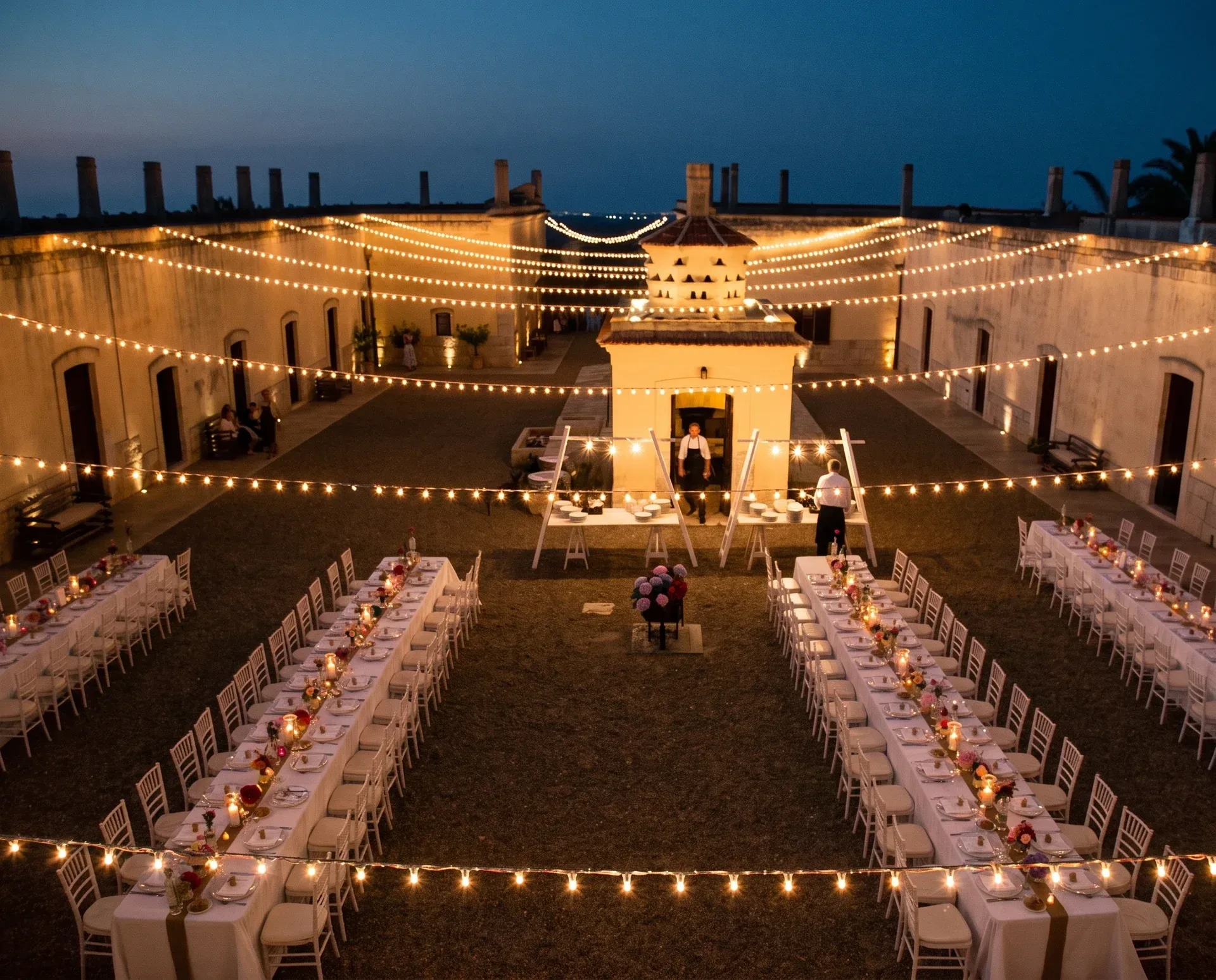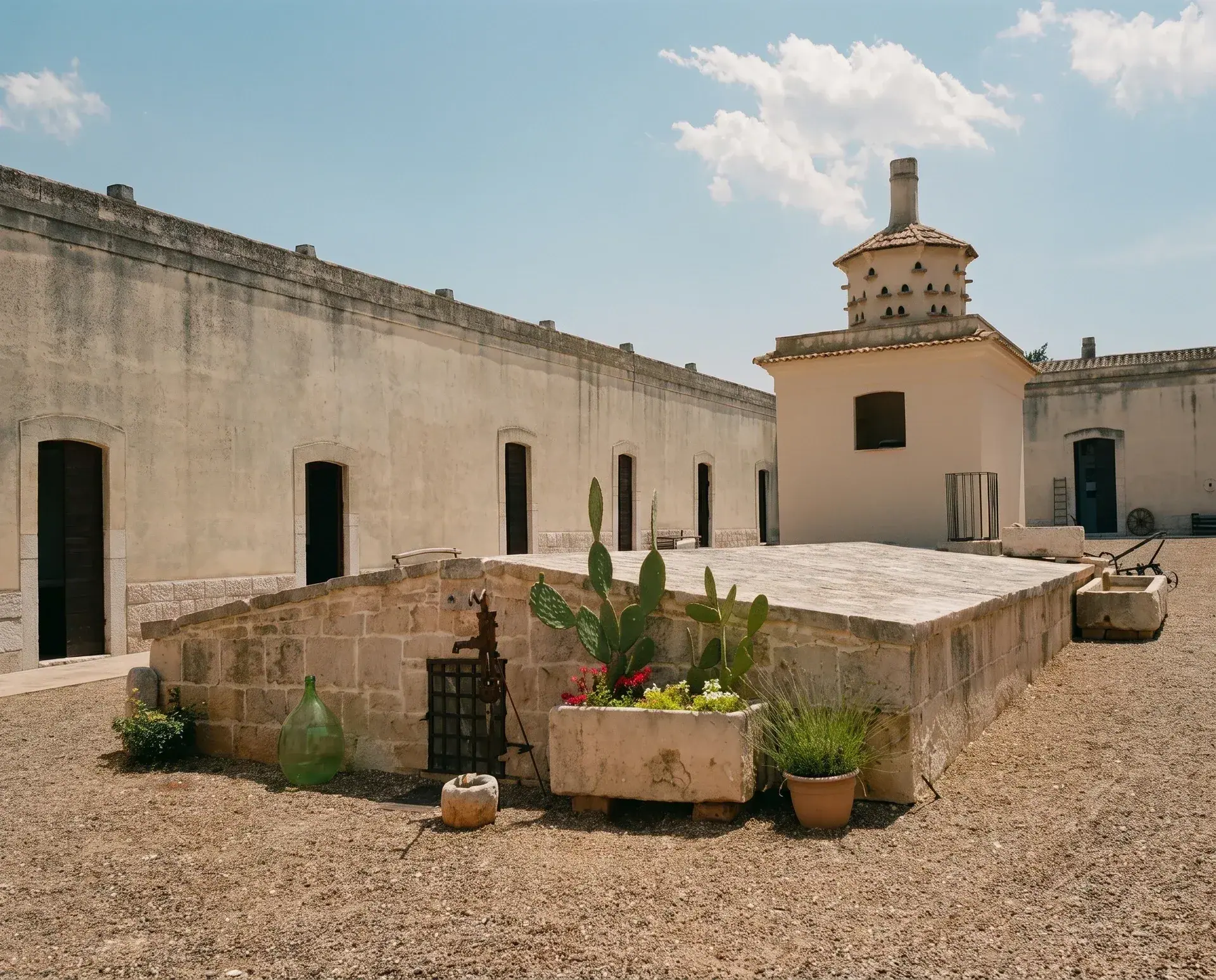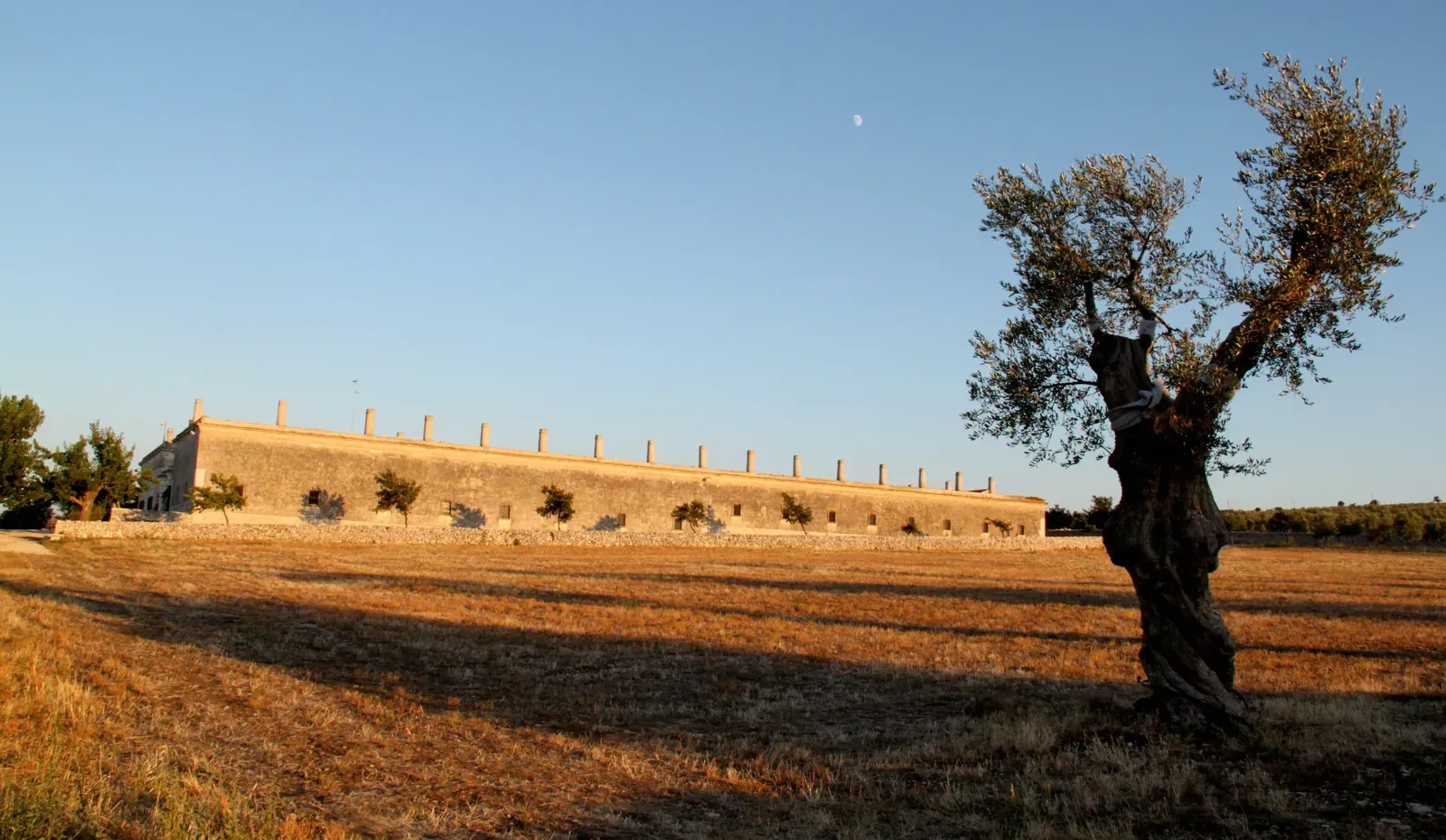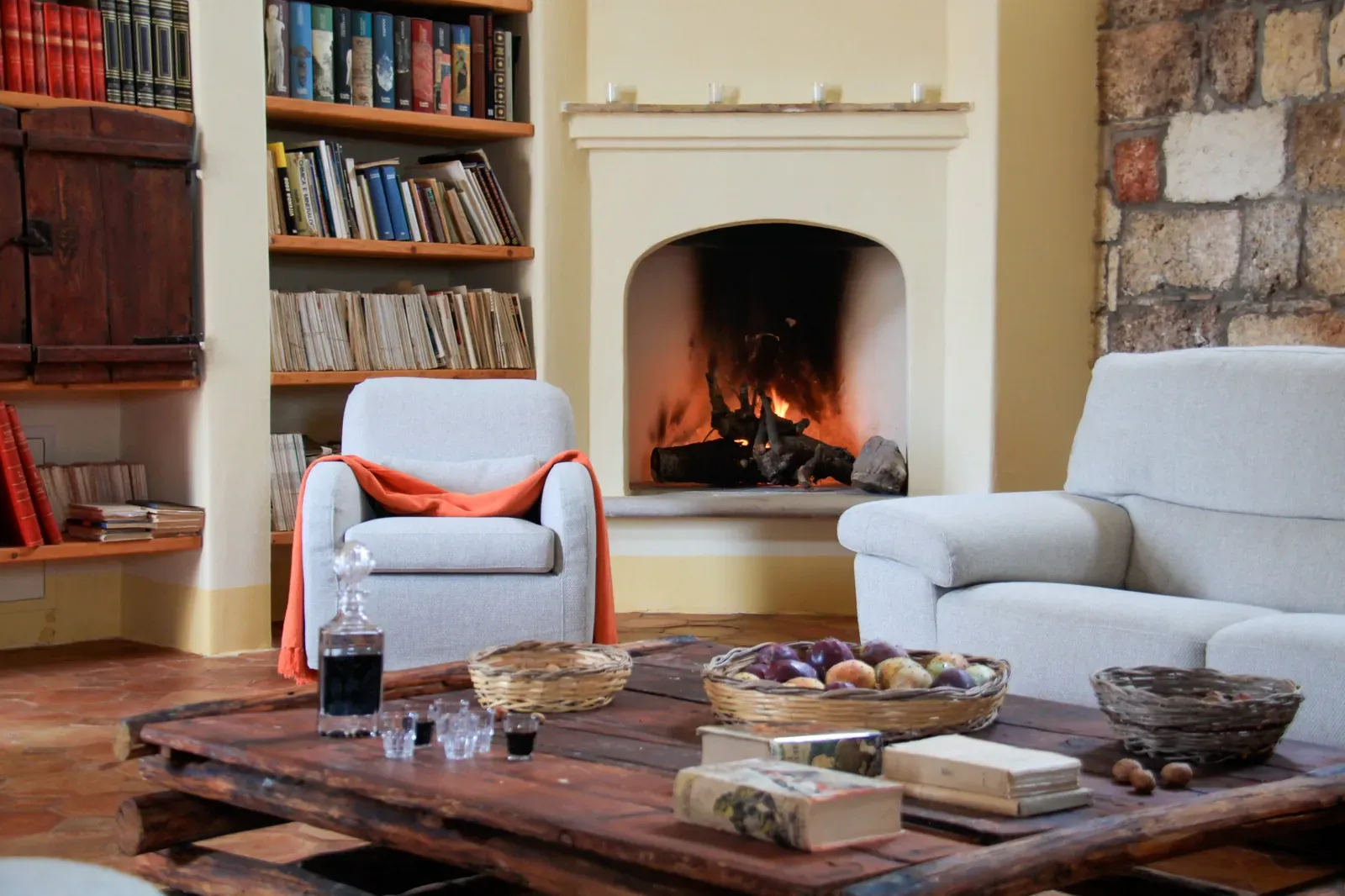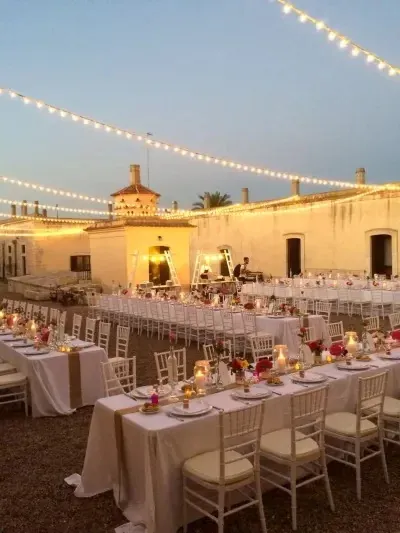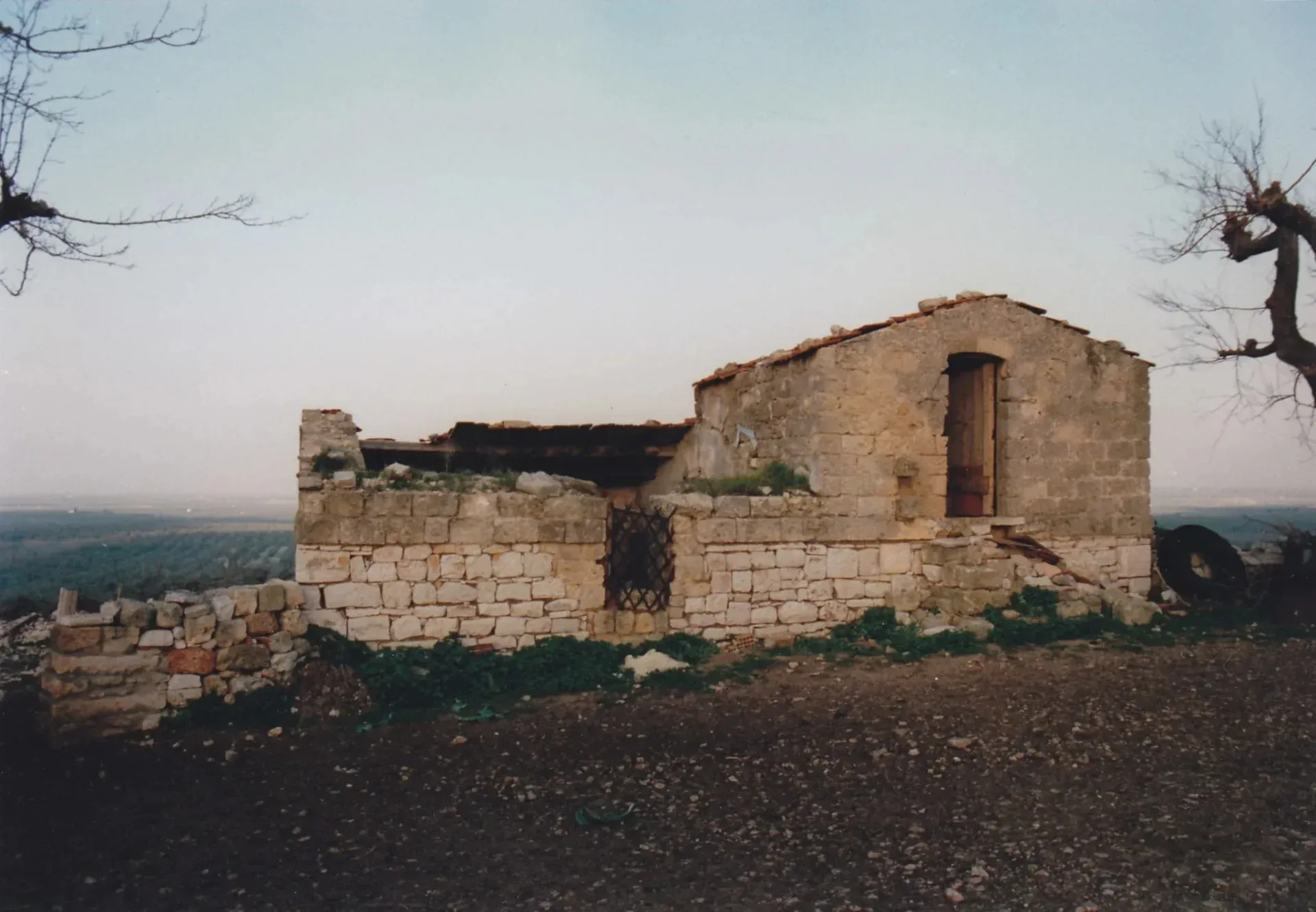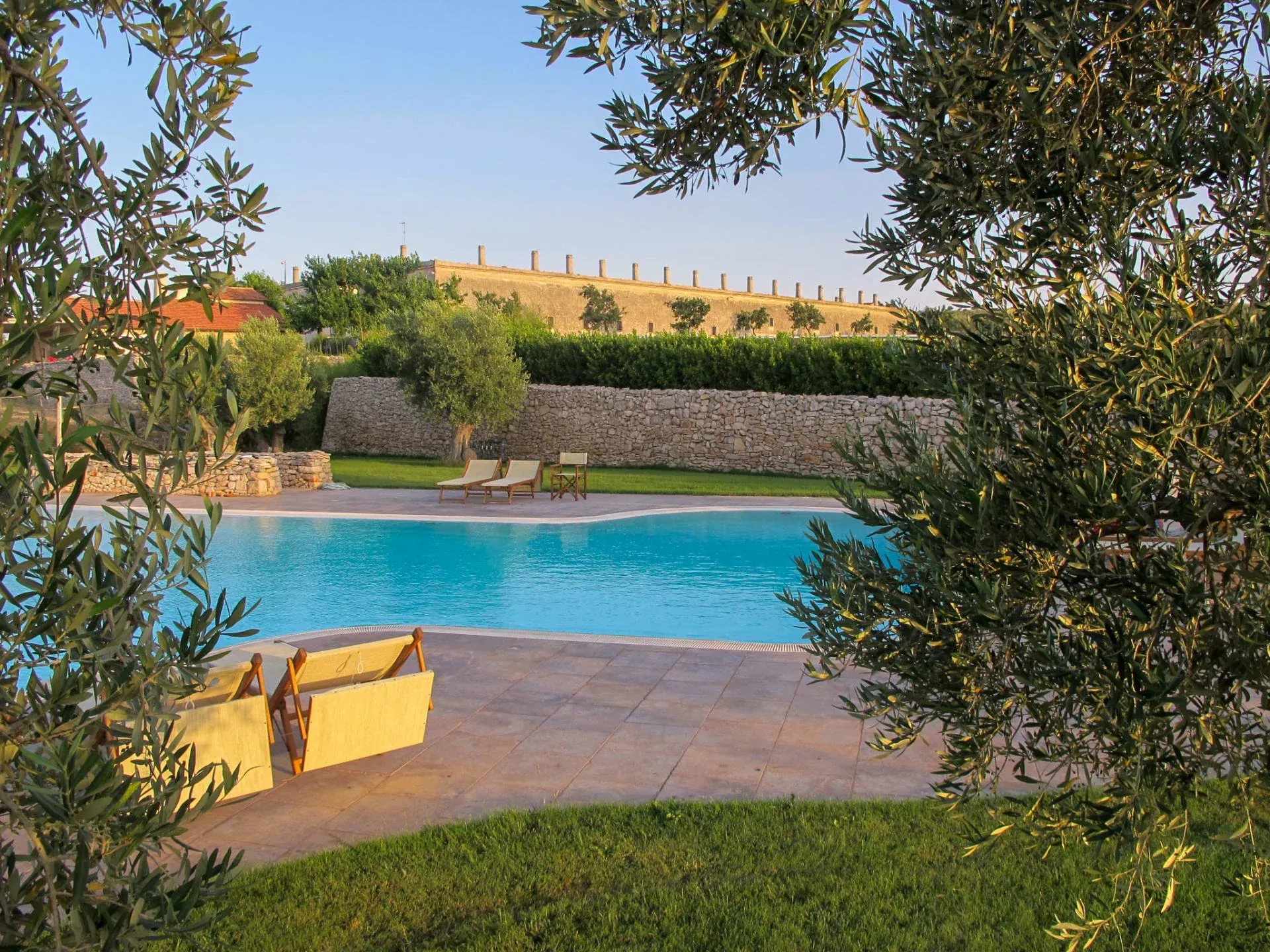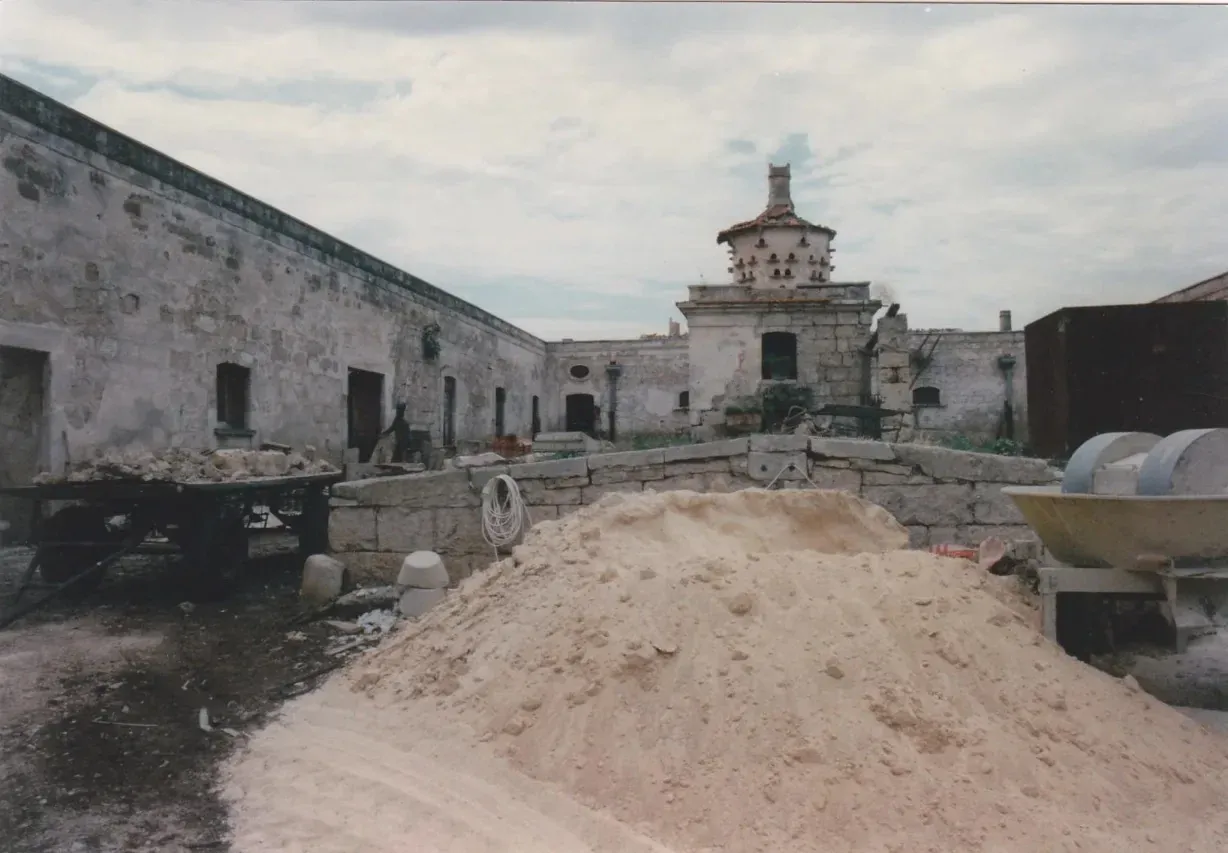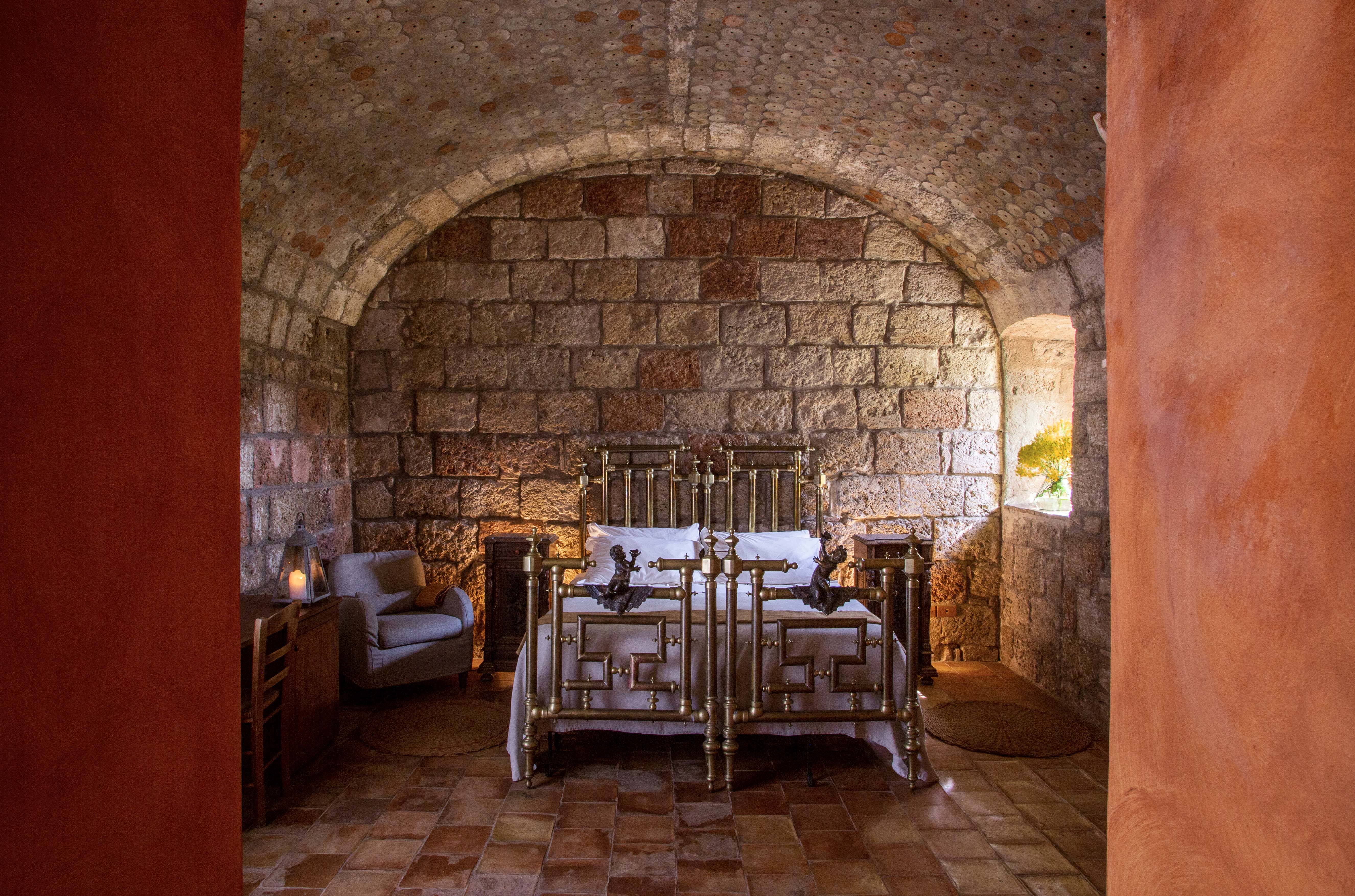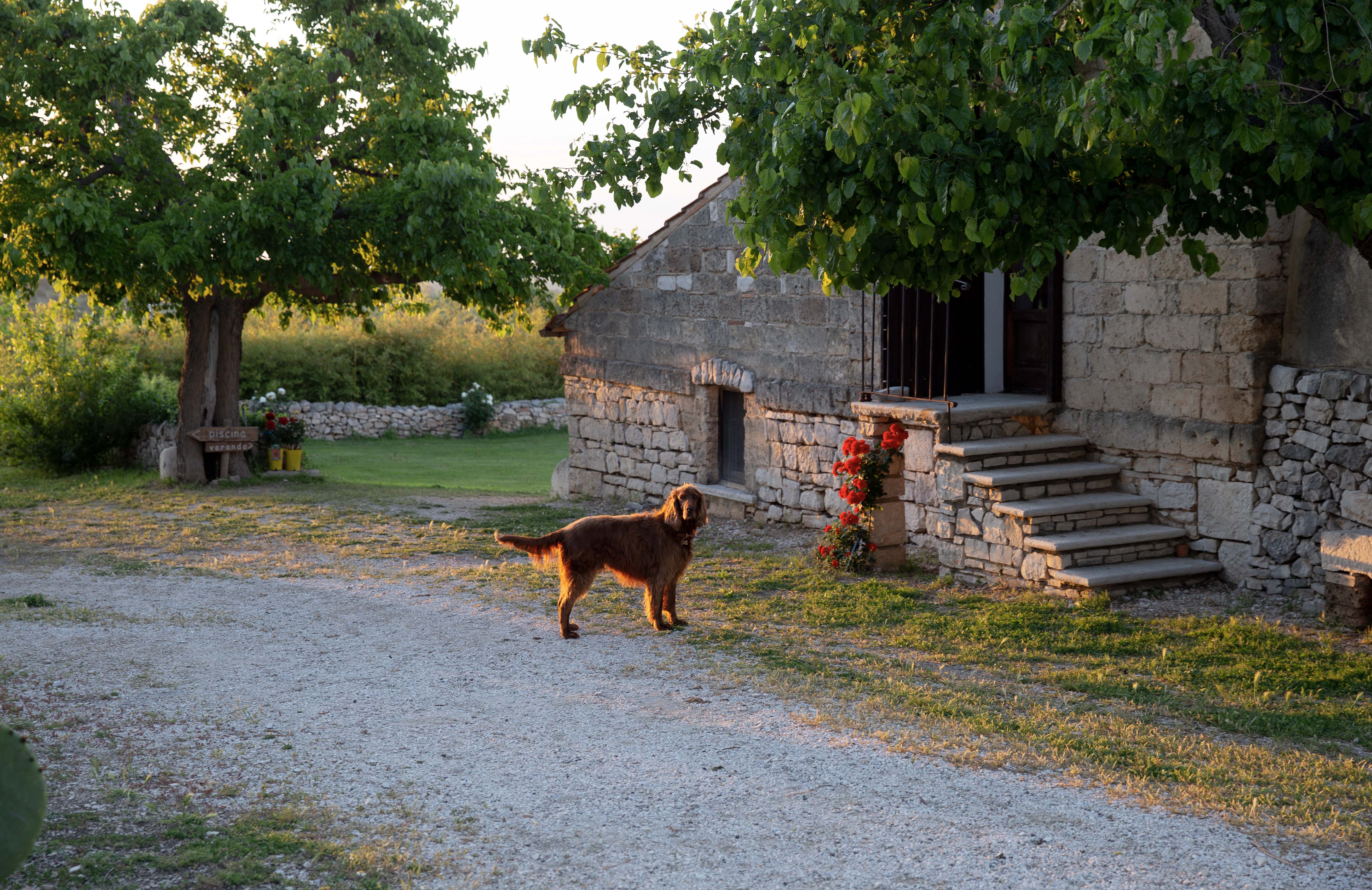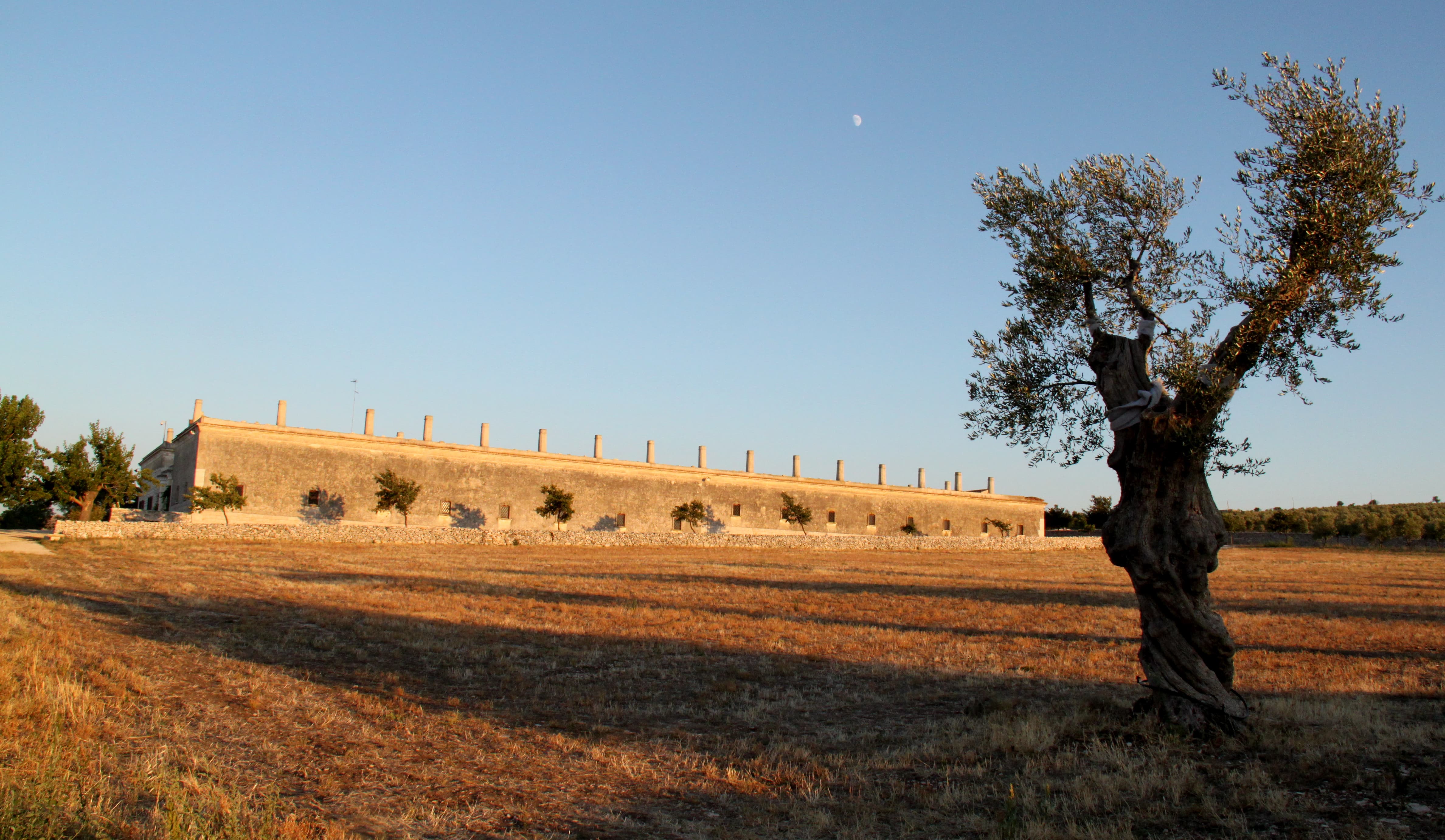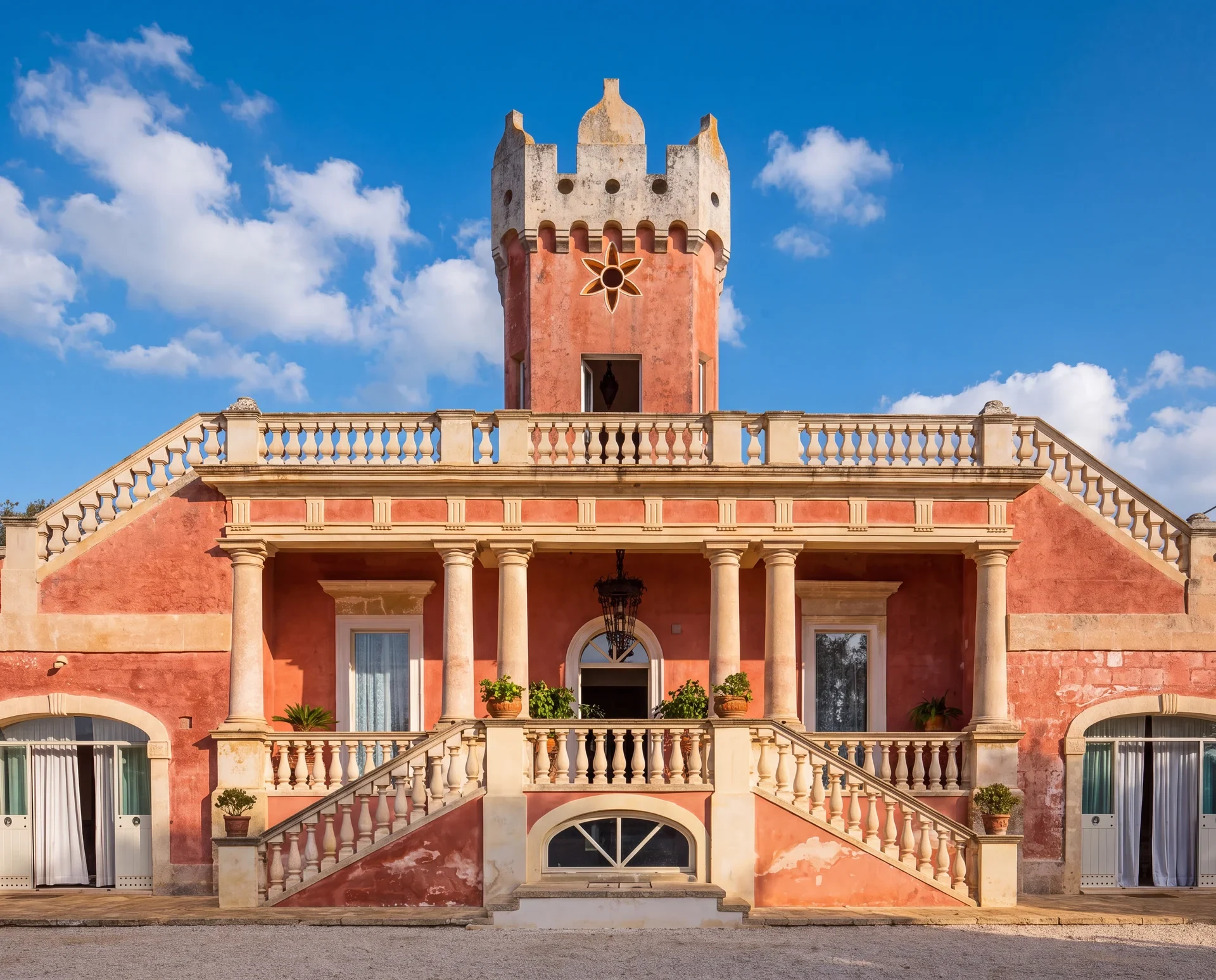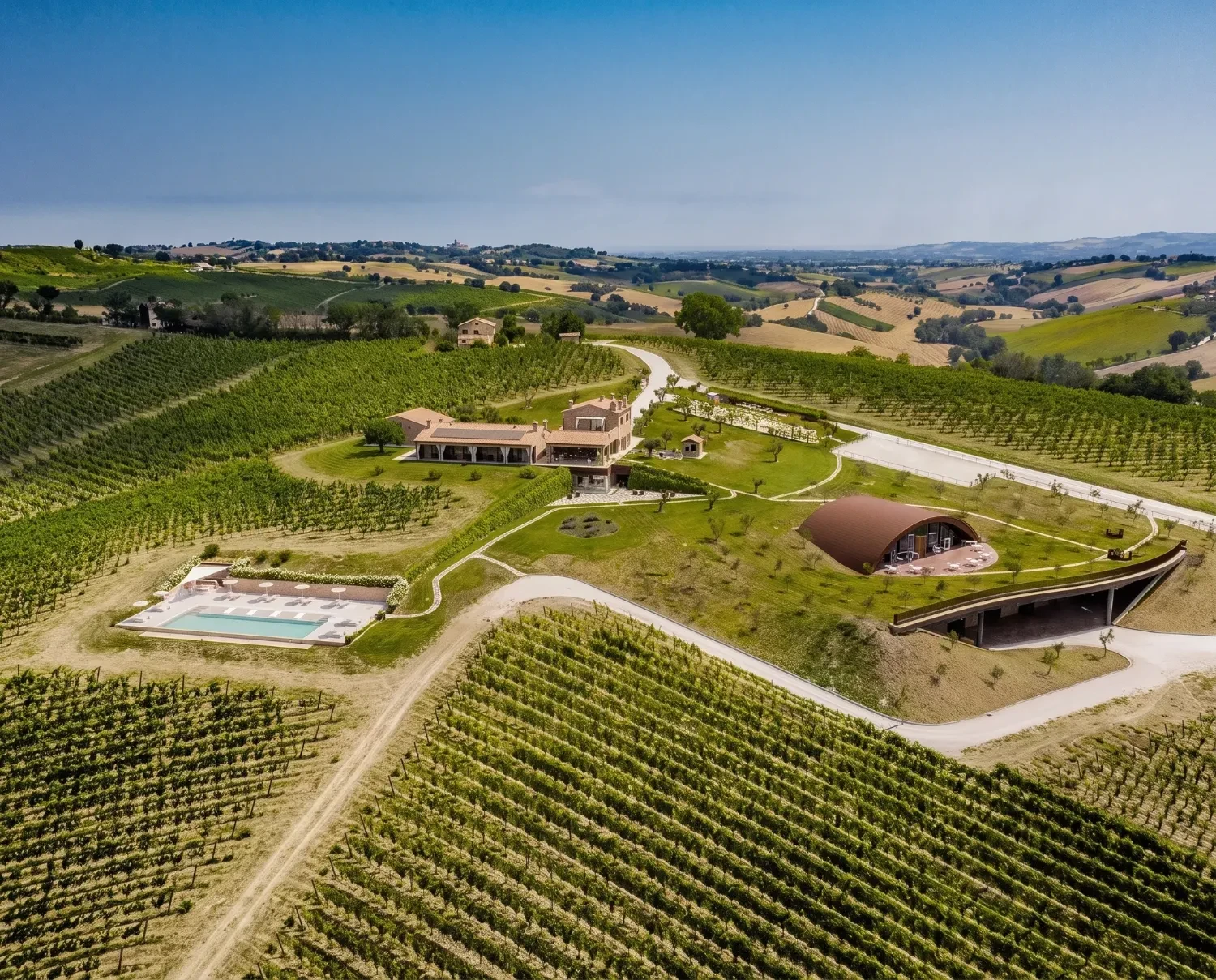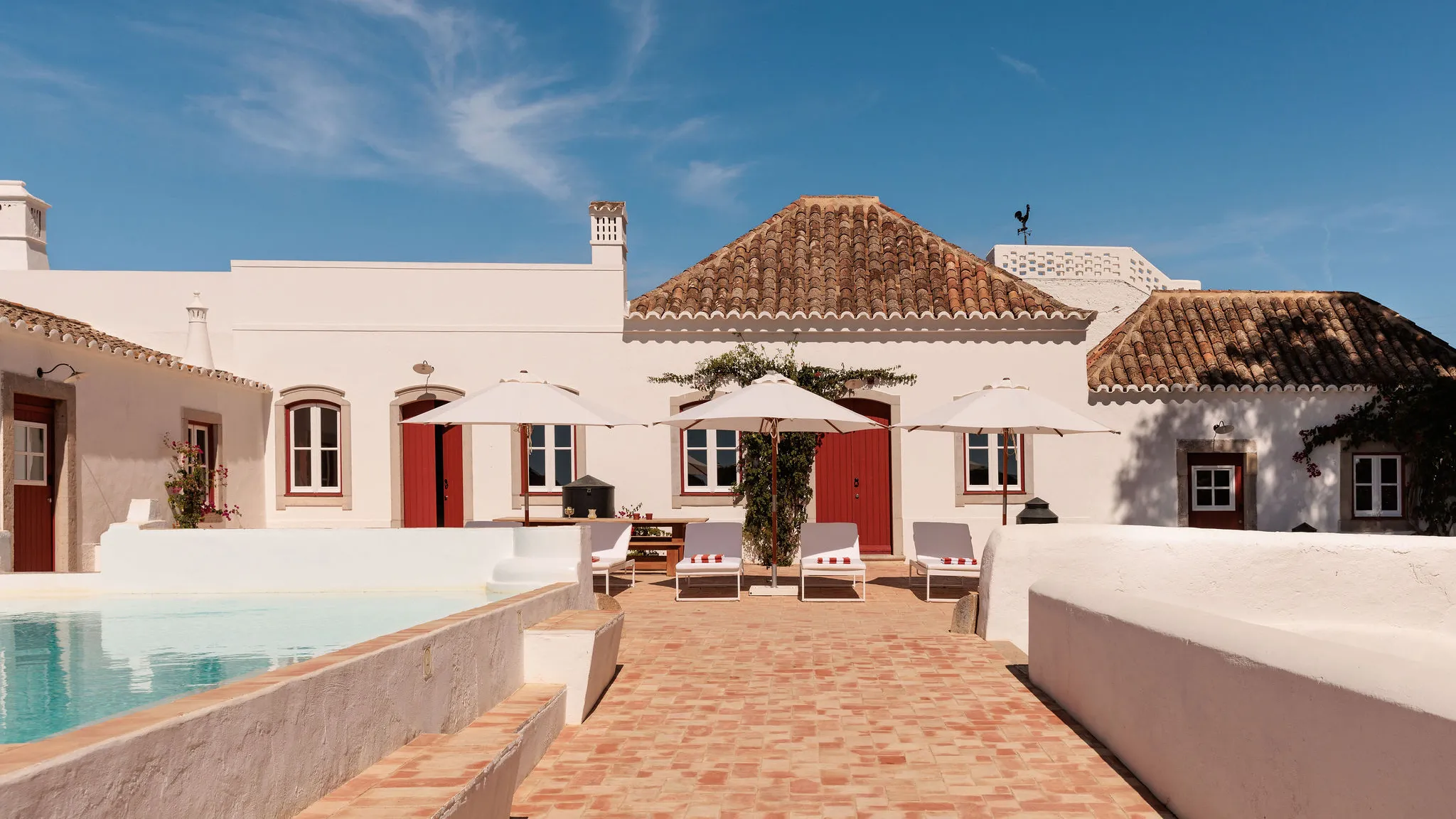
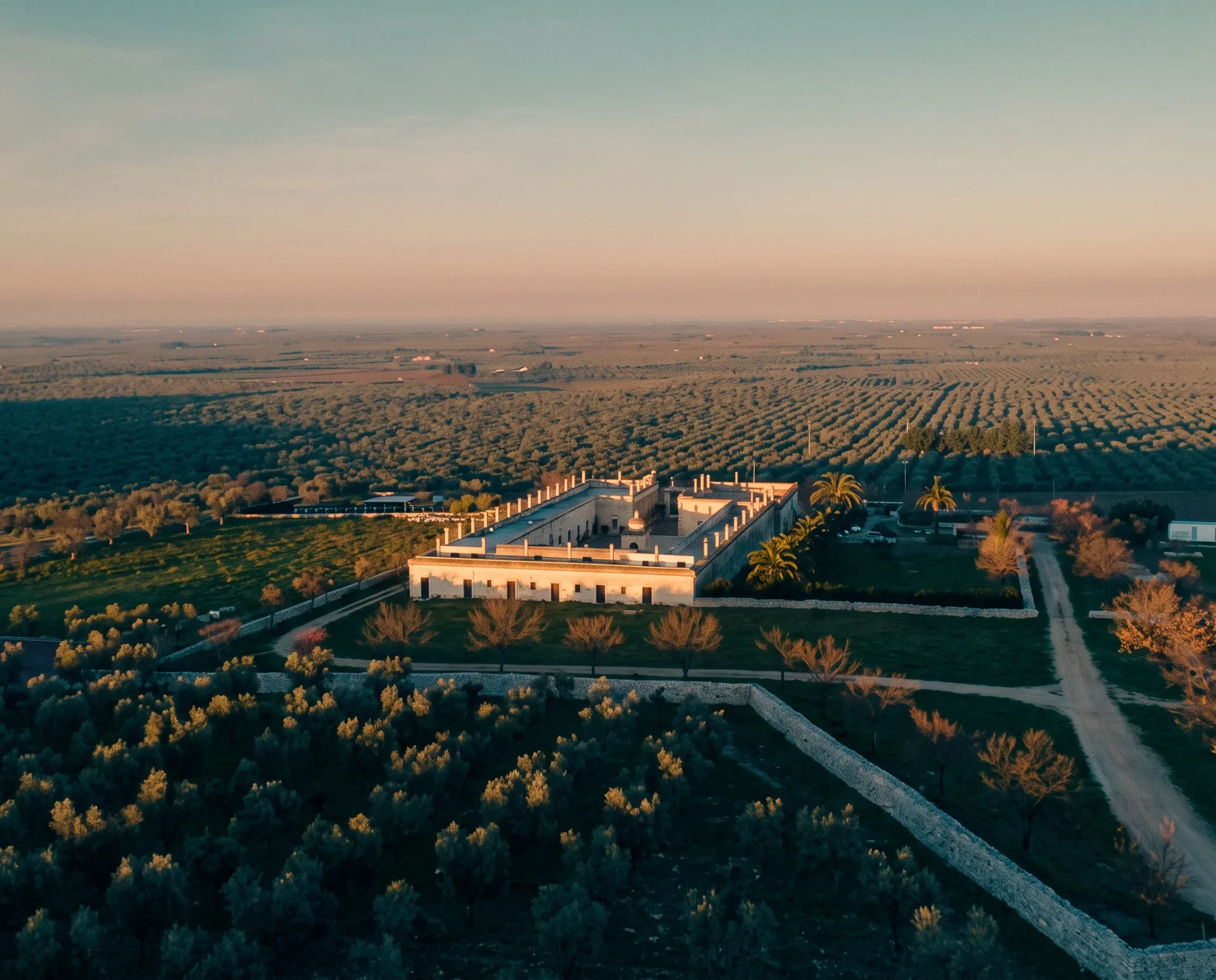
The oldest wing went up in the late 1700s — thick stone walls under perforated terracotta-cylinder ceilings built to regulate the heat. A century later, Baron di Faivano added a second wing to house sharecropper families, each in a small stone room with a fireplace; at its height the estate carried forty chimneys on its roofline, and the day labourers who had no room built themselves dry-stone shelters — casedd — that they shared with their donkeys. Then the wine crisis of the late 1800s forced a sale, vineyards gave way to almonds and olives, and by the middle of the last century the masseria was rented out to shepherds and falling in on itself.
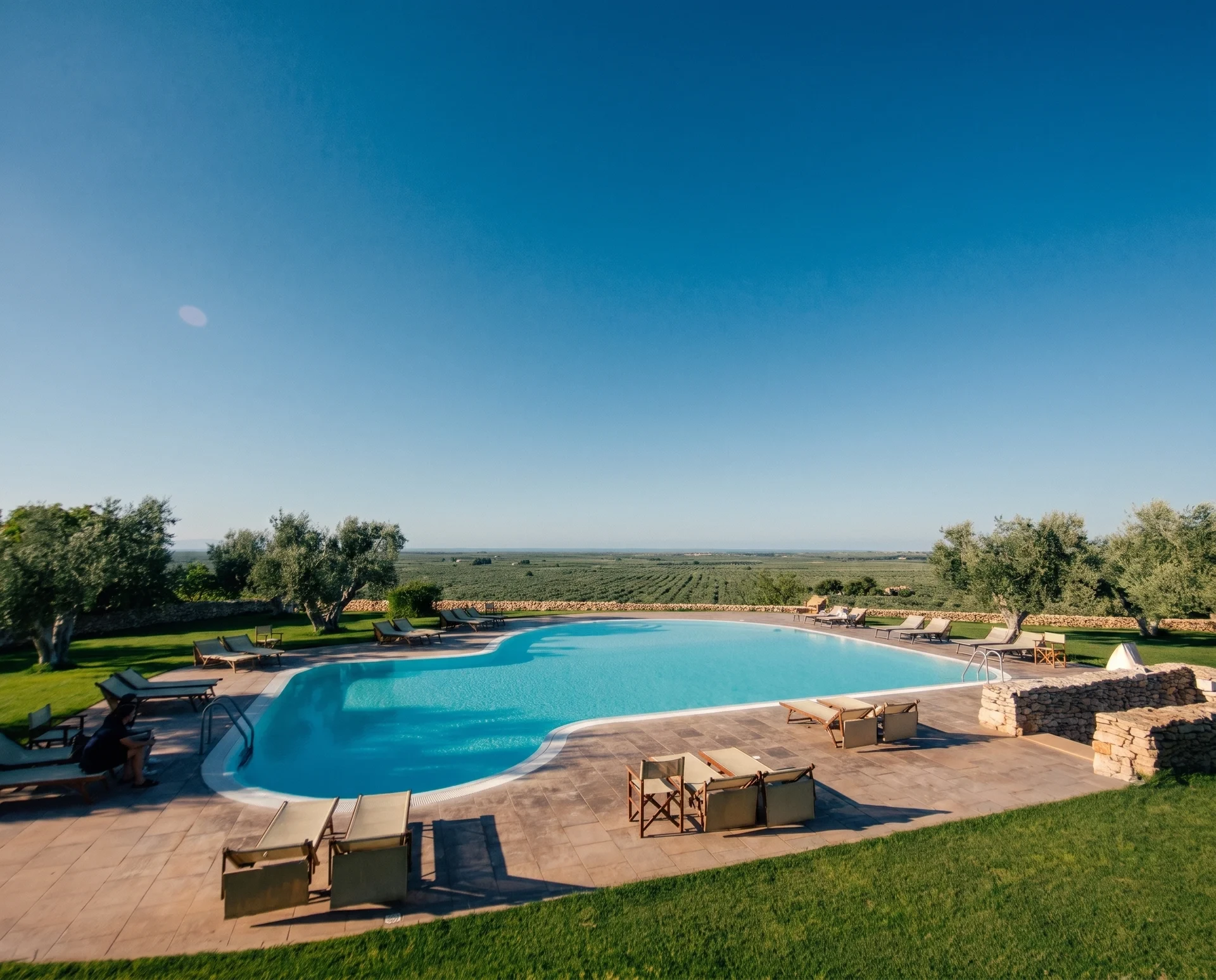
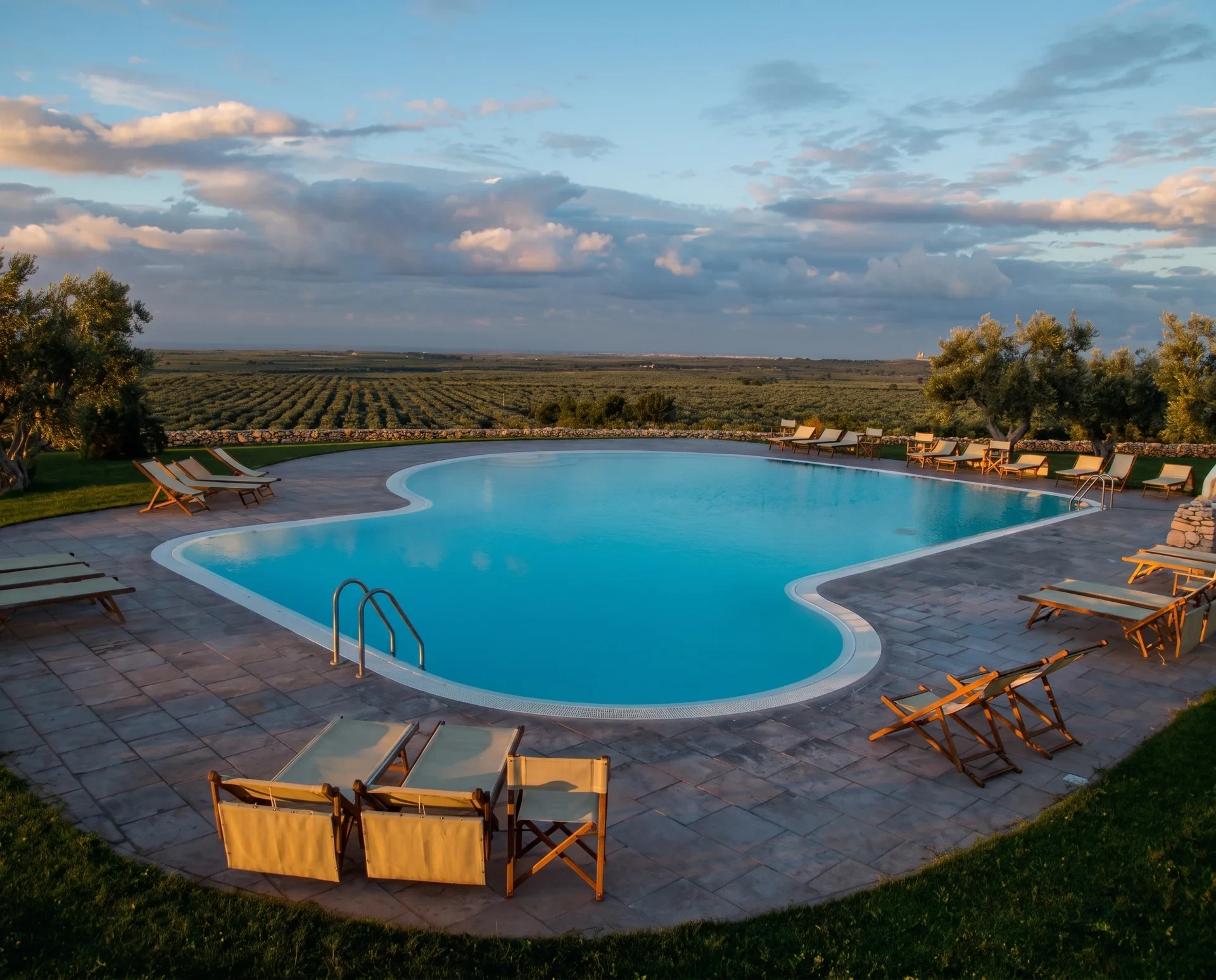
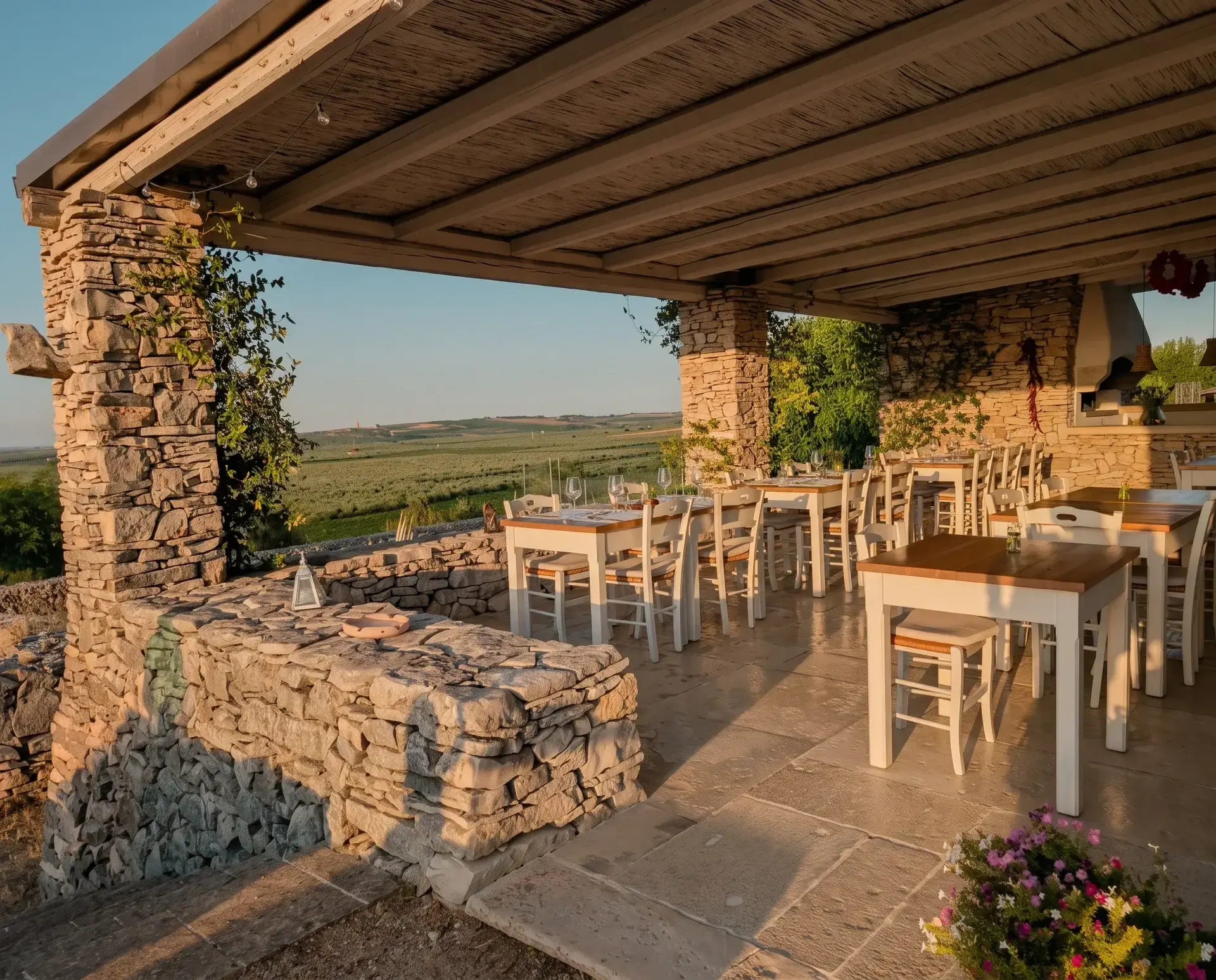
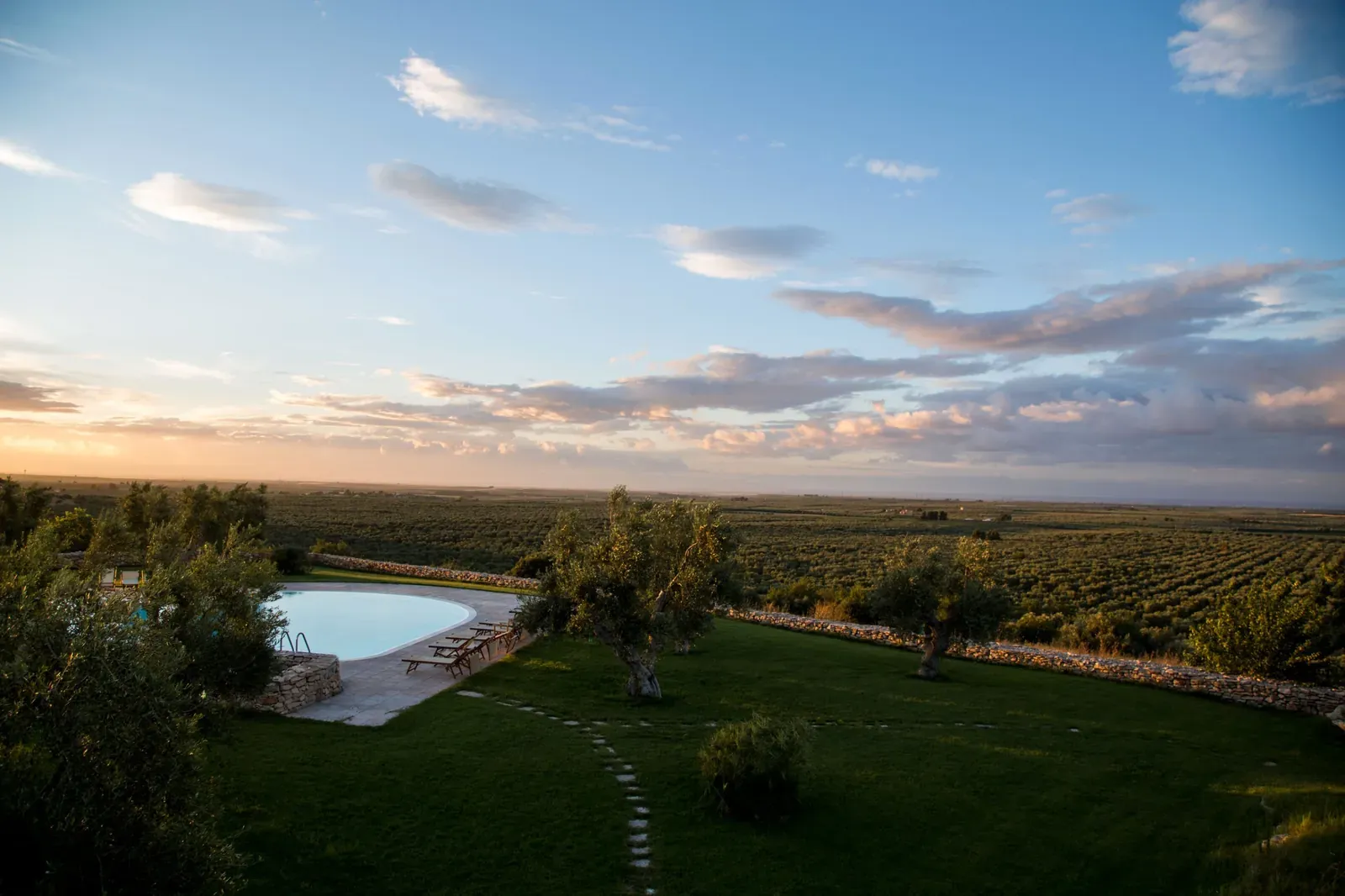
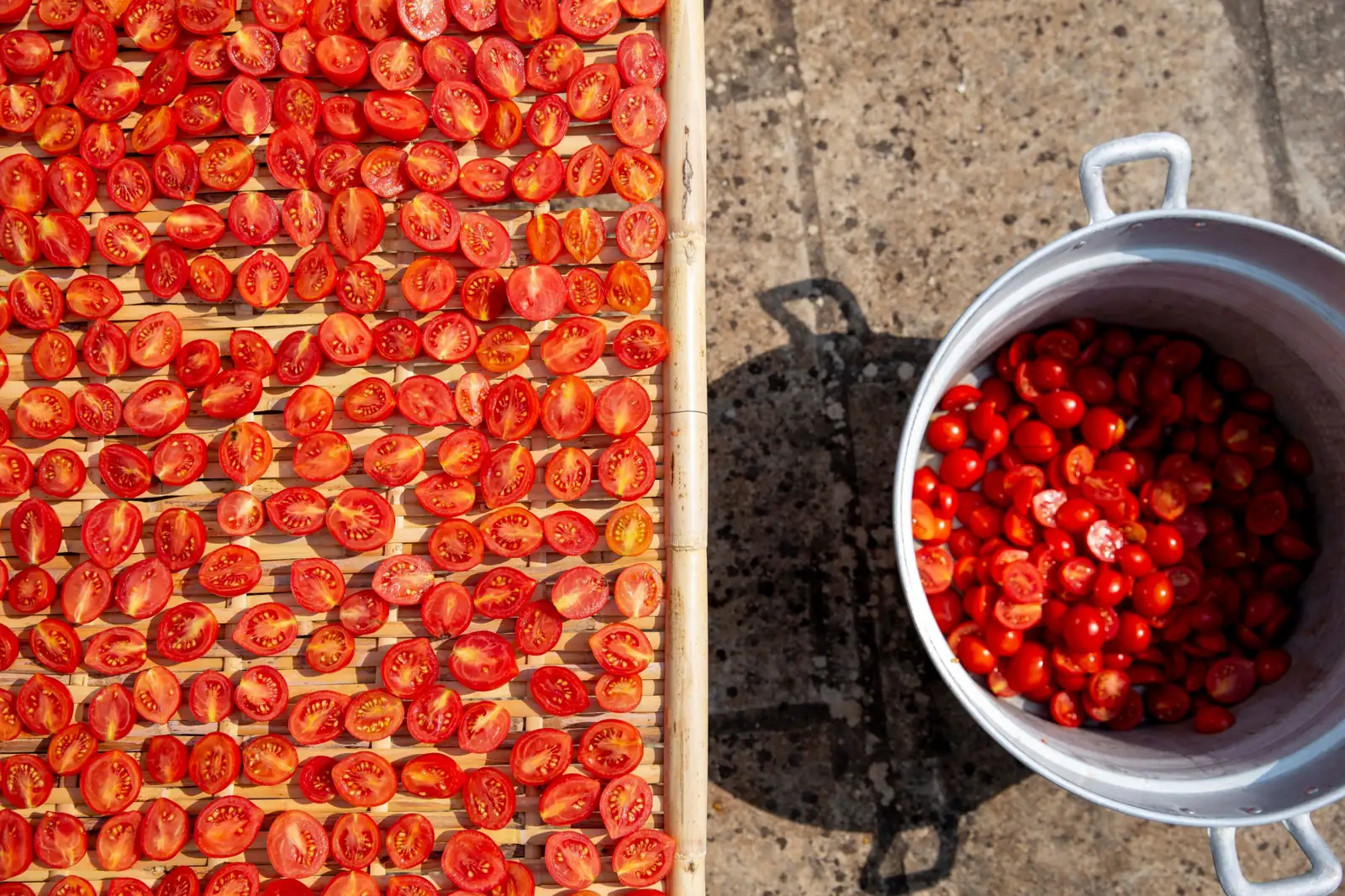
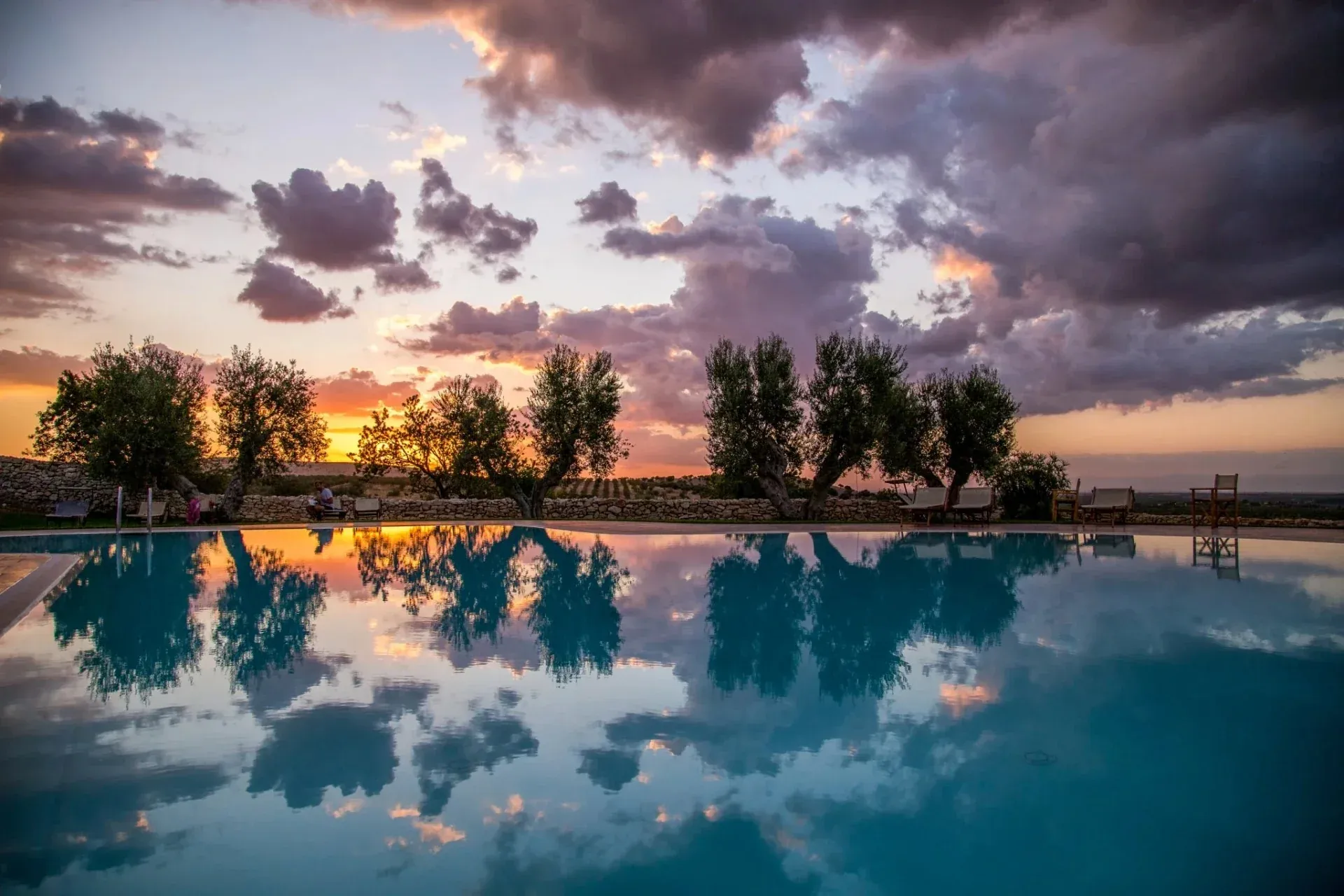
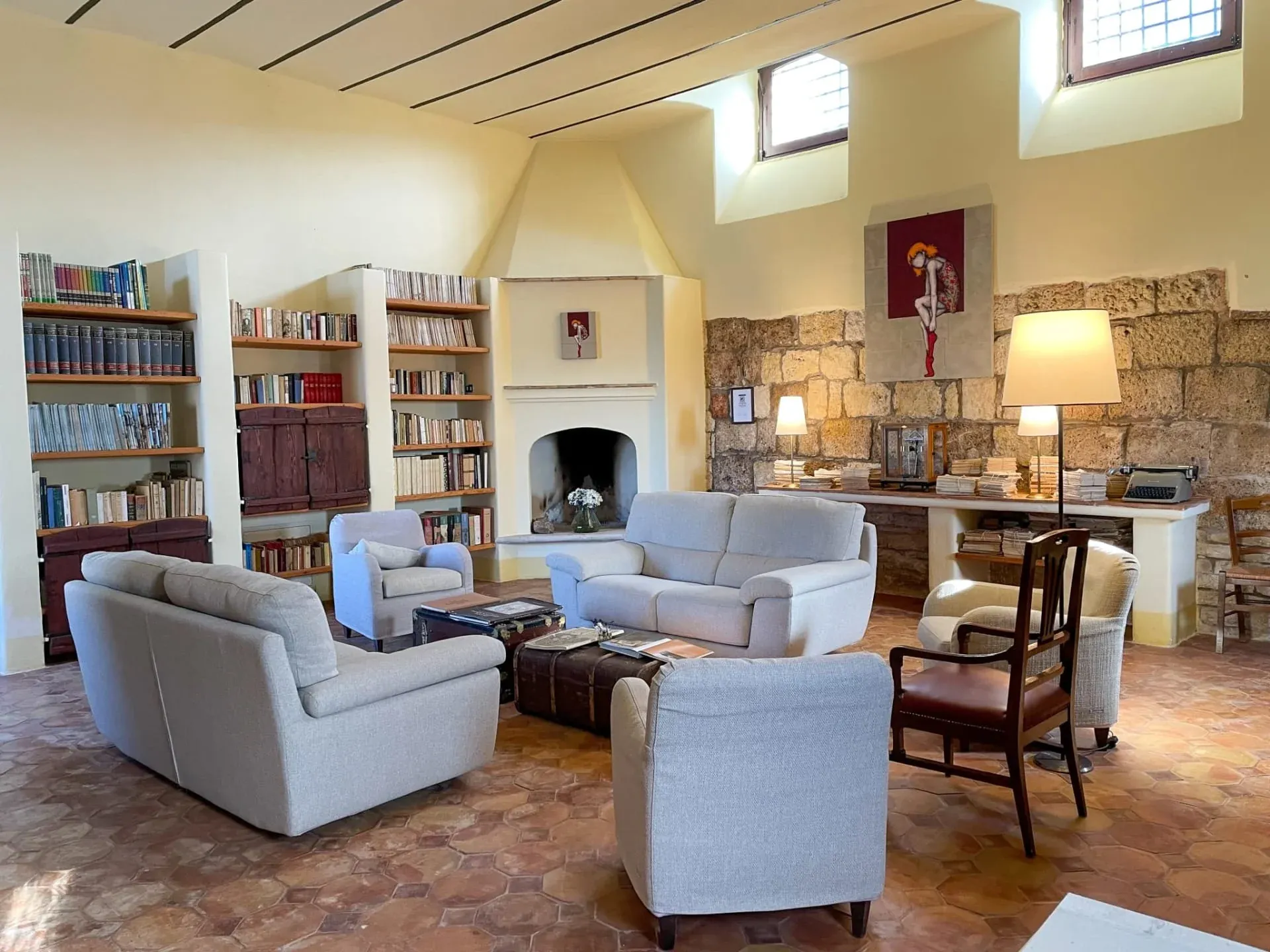
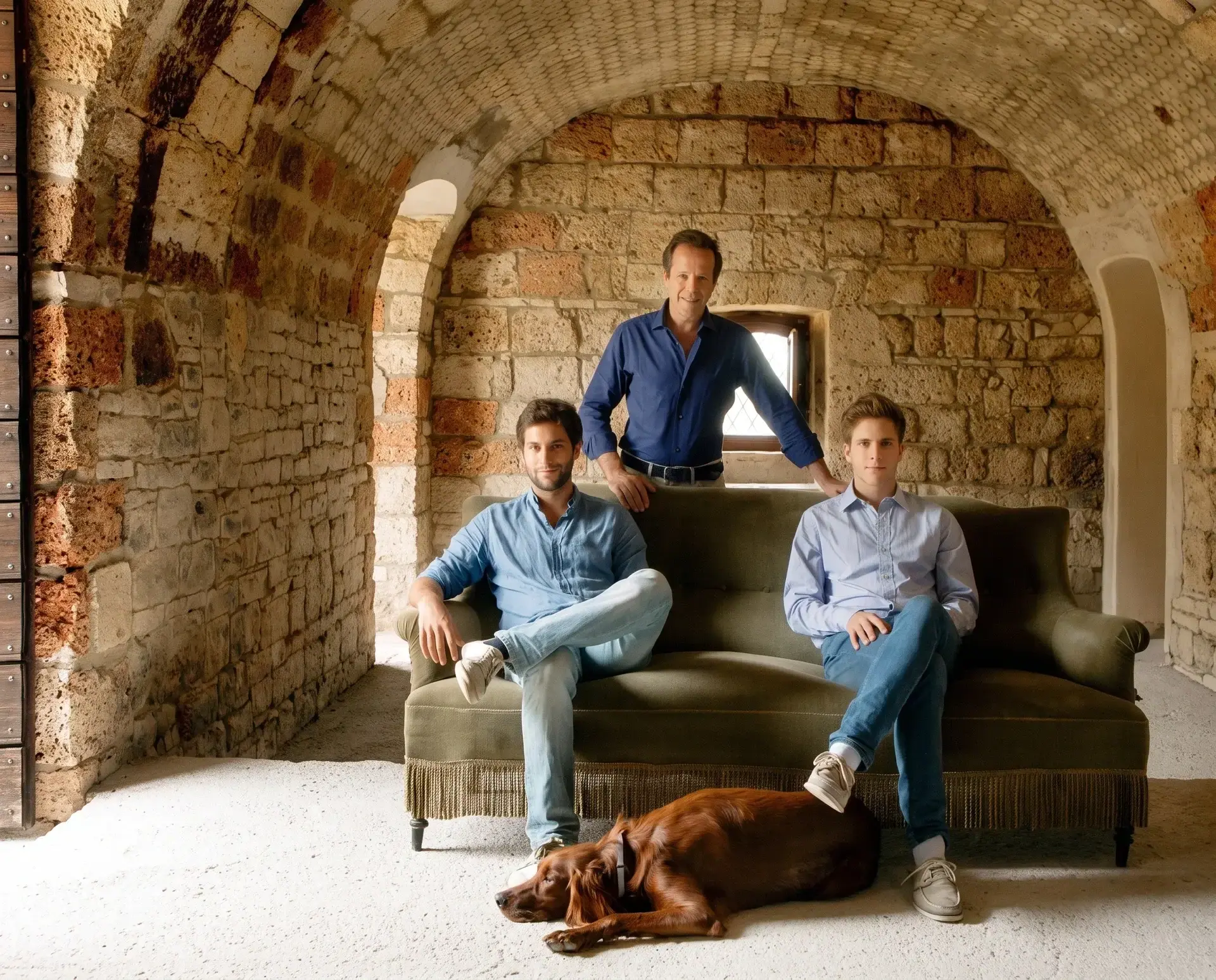
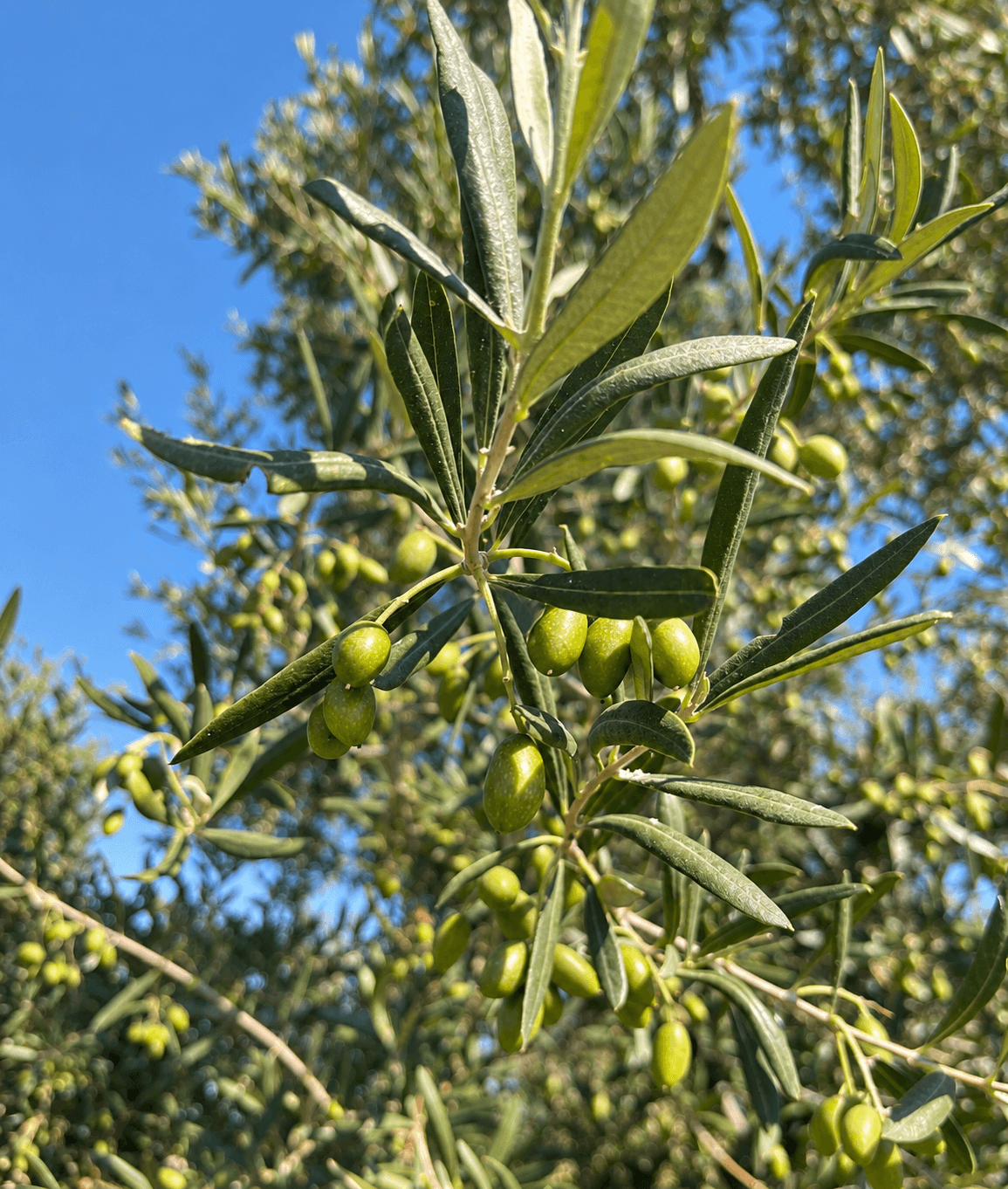
Pietro Petroni bought the neglected farmhouse in 1991, drawn to the landscape and the history under it. What followed took decades: ten thousand olive trees, ten thousand grapevines, two thousand almond trees, a thousand cherry trees, an artesian well drilled 535 metres down, and around a hundred hectares left to wild pasture, orchids and karst. The masseria itself was restored between 2000 and 2003. The name — roughly "Valley of the Moon" — carries the idea the place runs on: the land and the lunar rhythms of sowing and harvest. Today the estate is certified organic (AIAB-ICEA) across some 210 hectares, and the family runs it themselves.
Read the full article