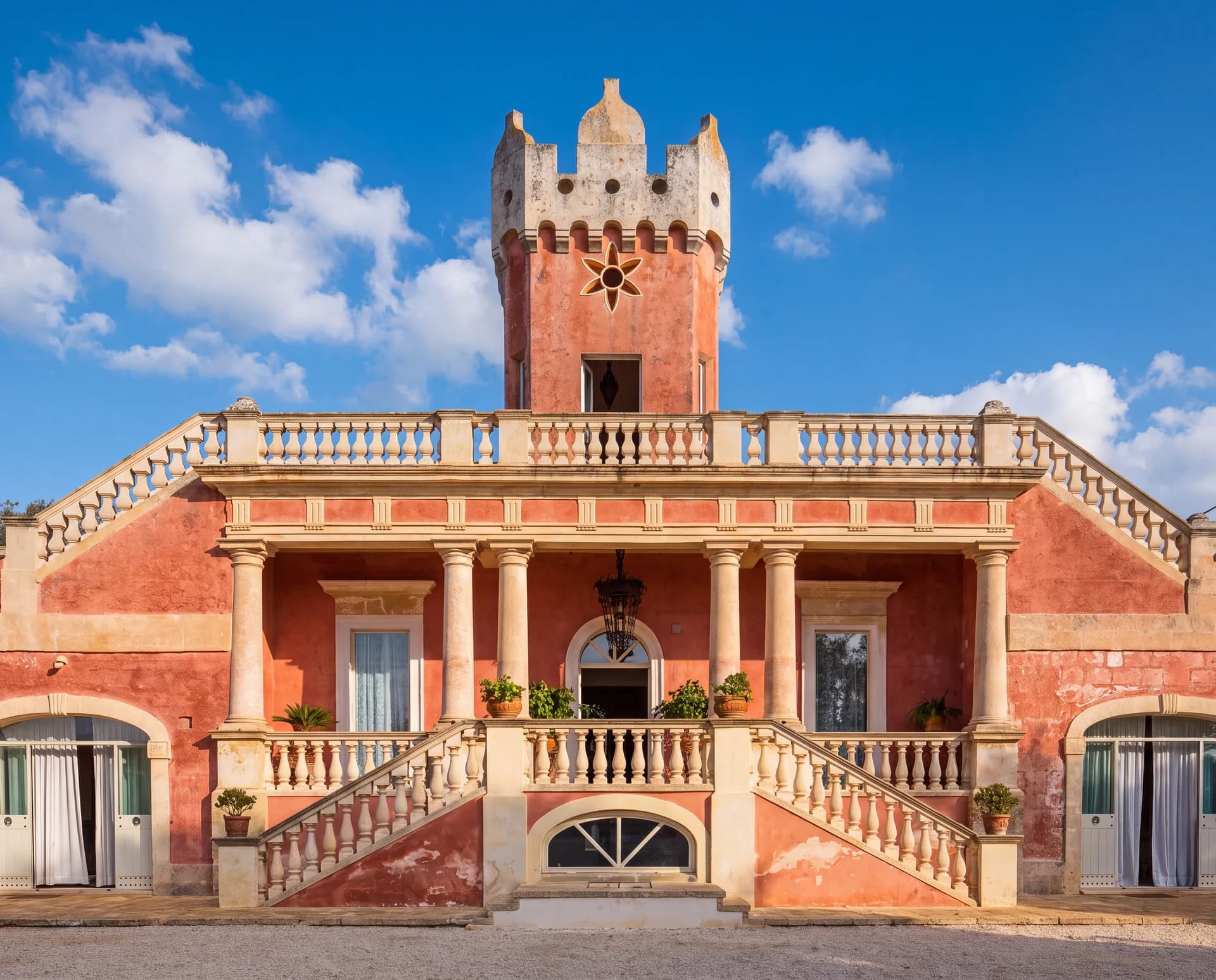
A nobleman's house from 1608 between Ostuni and Lecce, empty for forty years and brought back by a man who insists that the house found him, and not the other way around.
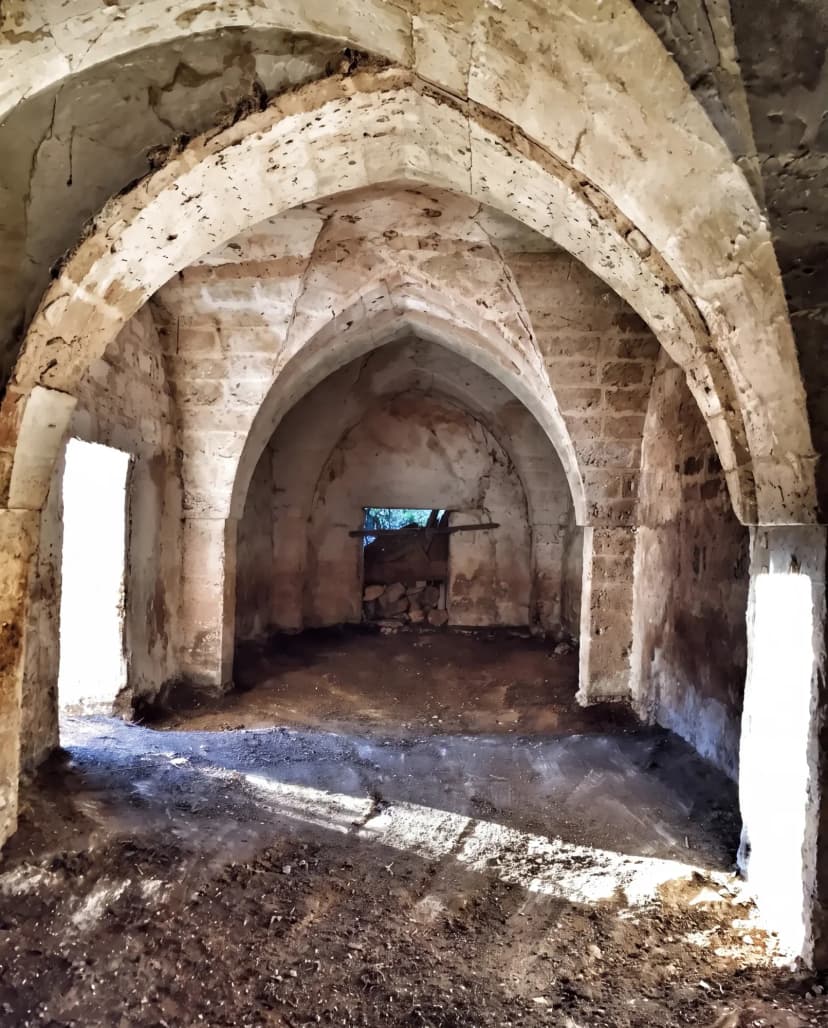
Gustavo Antonioni saw Masseria Partemio for the first time on his 48th birthday. A cold, grey day in Puglia. The house had been empty for four decades: no electricity, no running water, no windows, no floors, trees growing up through the rooms. A Moorish tower above it all. And, in residence, two hundred white goats.
Gustavo hadn't been looking for this. The plan was a modest country house, two or three bedrooms, as a weekend counterweight to London, the latest stop in his career at global entertainment companies. A friend had first brought him to Puglia in 2010; and then the search took six years. Gustavo was born in Argentina to Italian and Greek parents, grew up in Mexico, arrived in Connecticut in the early eighties, and studied architecture before the entertainment industry claimed him. Houses were the thread he kept pulling on the side: he had already renovated in London, Miami, and Los Angeles.
Then the goats. They reminded him of Hippolito, the West Highland Terrier from his Miami years. The property's owner, he then learned, carried the same name as the dog. And the house itself was called Partemio — in Spanish, his first language, parte mío. Part of me. "I didn't find Partemio," he says. "Partemio found me."
His father took a less mystical view. On his first visit he told his son "I think you are going through a mid-life crisis. How can you possibly want to buy a pile of rocks?" Then he invested in the pile of rocks, and is today, by Gustavo's account, its number one supporter.
The other half of the house is Gustavo's partner Marc Nijenhuis, a Dutch brand strategist and copywriter who met Gustavo in Puglia while the restoration was already underway. The division of labour is clean: Gustavo runs the estate, full time; Marc keeps his own career and shapes how Partemio speaks to the world. "We celebrate Puglia through the house," they told us. When you see what they mean by it, you can only agree.
Stay here
Ready to stay at Masseria Partemio?
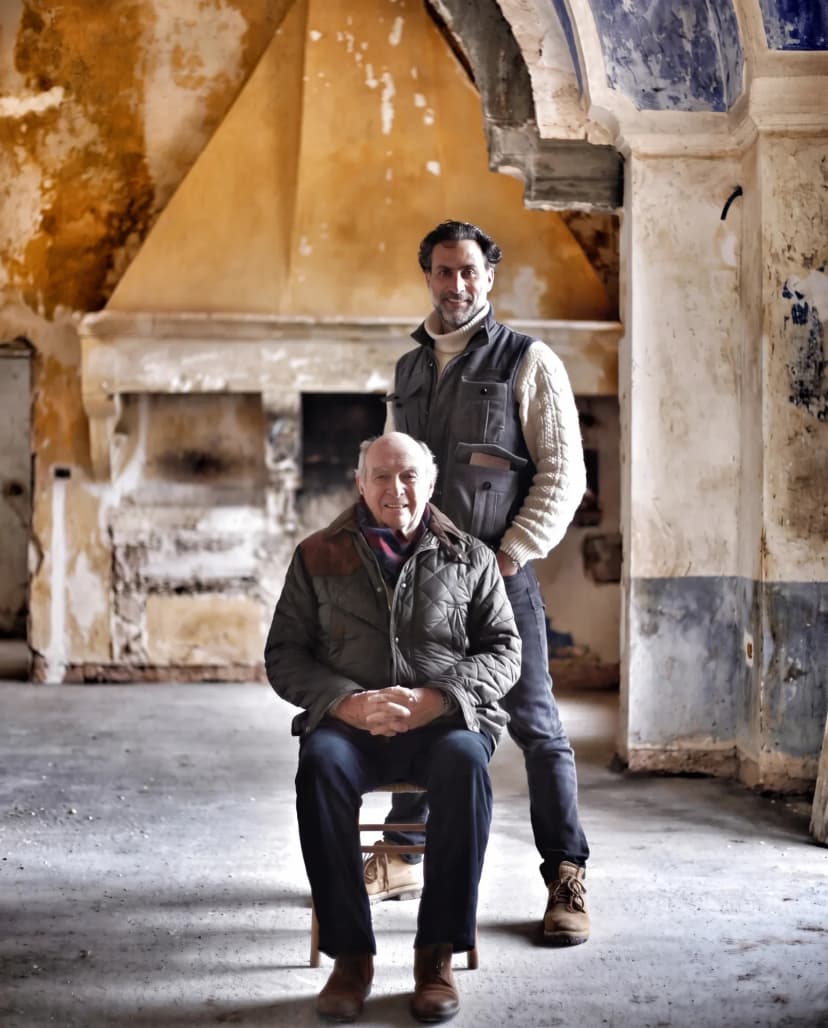
I didn't find Partemio. Partemio found me.
GustavoGustavo closed on the property in June 2017. The first task was not building but waiting: clearing rubble and the trees that had rooted indoors, then letting two southern summers bake decades of damp out of the stone before anyone could touch it.
The first drawings came from Maria Formosi, an architect from Francavilla Fontana who restores churches across southern Puglia, and who set the direction before her involvement ended early. A local geometra from Latiano, Salvatore Rizzo, carried the project home. The house had no foundation, so they built one. The vaults were exposed from above and reinforced with steel cables and fibreglass. Because Partemio is a listed building, every change to the façade needed sign-off from a council in Bari.
The nobleman's house turned out to be even older than they initially thought — dating back to around 1608, once home to the Benedictine nuns of Oria, and once tied to the Knights of Malta, whose eight-pointed star still sits in the sky-blue vault of the living room. The tower came later, under Spanish rule.
The renovation was finished in the summer of 2022, marking five years from the goats to the first guests. Gustavo has a Puglian proverb for it now: piano, piano si va lontano. Slowly, slowly, you go far.
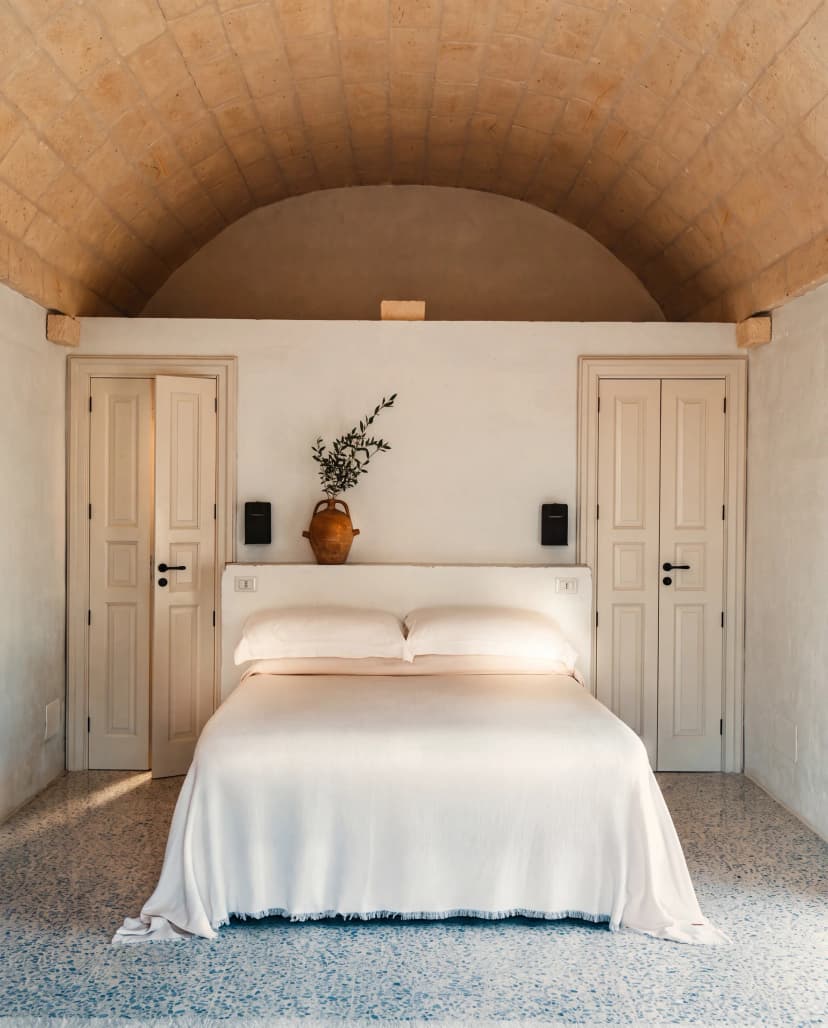
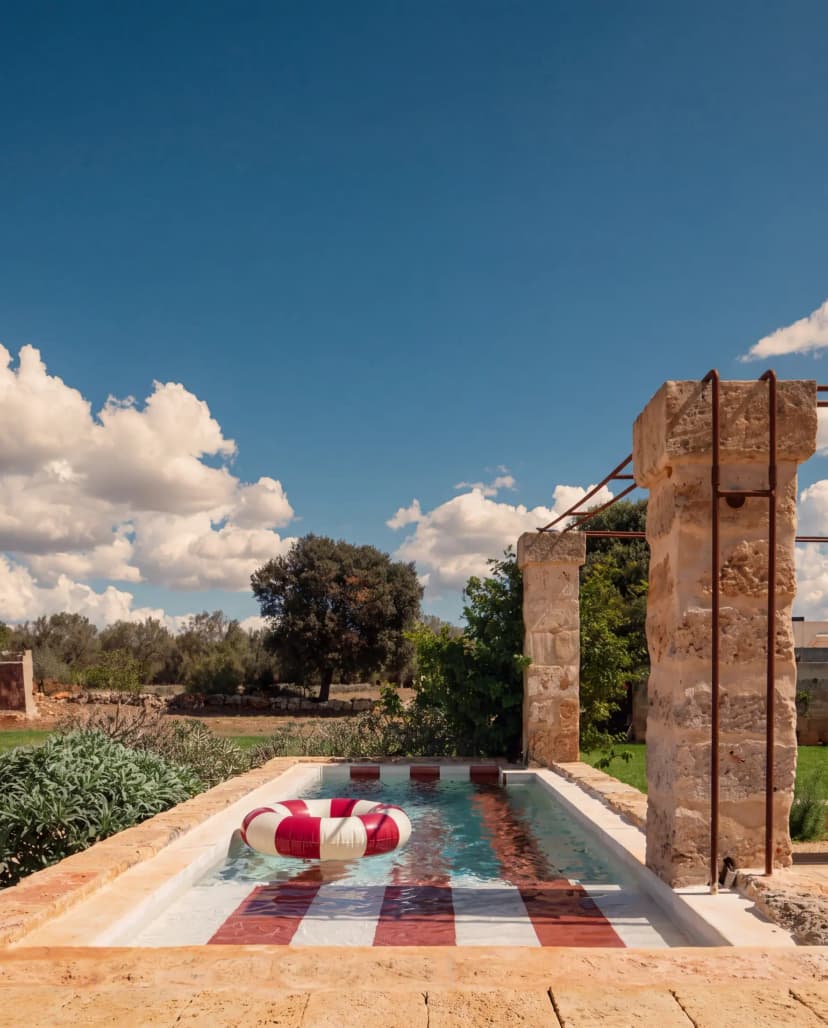
Partemio is Gustavo's and Marc's home first. They live in it, and guests stay inside that fact rather than alongside it. "It's really about a simple, sophisticated, unpretentious stay that is real," Gustavo told us, "and it's like you're at your best friend's house." There is no reception, no booking platform; guests have arrived mostly as friends of friends.
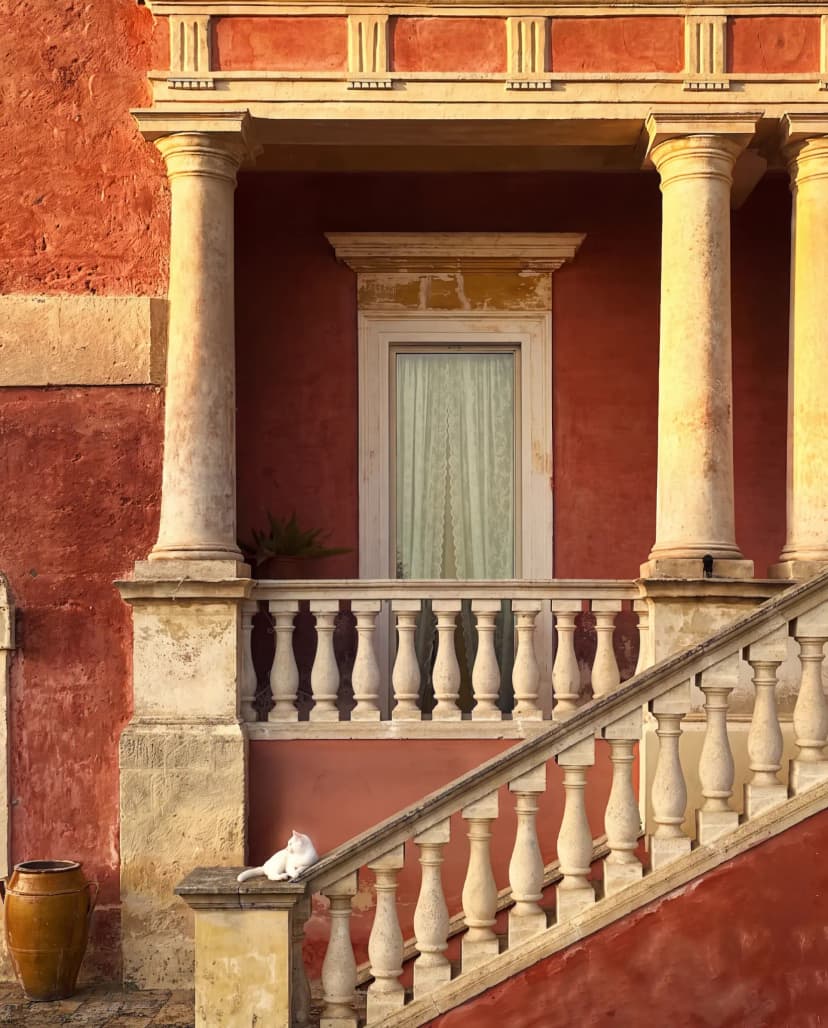
The interiors follow the same logic as the building: rescued. Nearly everything is secondhand, found in the antique markets that open across Puglia on Sundays, and none of the items are uniform. About ninety per cent of the ceramics come from Grottaglie, and the hosts will drive you there if you ask where your plate was made. The exceptions are the practical things: linens and towels, handmade in Puglia. The palette was rather uncovered than chosen: Pompeian red and ochre found under the exterior render and revived in lime paint, as well as two painted ceilings found under centuries of whitewash inside.
The suites sit under the original vaults. One, the former shepherd's quarters, keeps its working fireplace. Another, under a barrel vault, opens onto a private terrace with an outdoor shower. At golden hour everyone drifts upward, to the bar inside the Moorish tower, where the façade goes pink (the house's nickname is the Pink Lady). Here is where they have, on occasion, even put a jazz band on the roof.
There's a little magic in who meets around the table.Gustavo
And then there is the table, Il Tavolo Rosso: nine metres of vivid red concrete on the terrace, seating twenty. At dinners, roughly half the chairs go to guests and half to their friends and neighbours, and the two of them think carefully about who lands next to whom. "There's a little magic in who meets around the table," Gustavo says. Dinner runs from their own olive oil and a chilled rosato from their own Susumaniello vines through orecchiette rolled by hand, and nothing is hurried, because nothing here is.
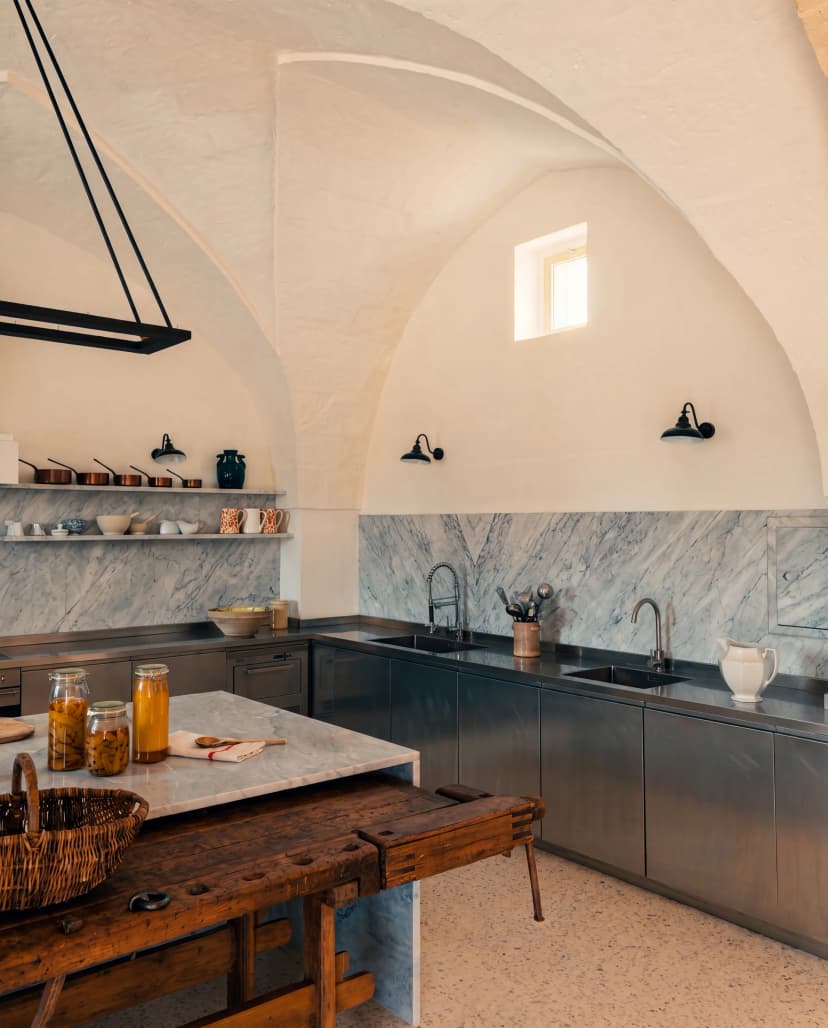
Next year the remaining stables become six more rooms, taking Partemio from five to eleven, with a larger pool and a small amphitheatre for music. The direction of travel is a quiet kind of wellness — yoga mats already wait in the rooms, and there are meditation rocks in the oak forest — but nothing is strictly scheduled or preached.
There is also an unresolved domestic matter: Gustavo wants chickens, for breakfast eggs. Marc does not. Negotiations continue.
Partemio is for guests who no longer need to prove anything, only to pull up a chair.